


















What Is a 22m Telescopic Diesel Boom Lift?
A 22m Telescopic Diesel Boom Lift is a self-propelled access platform with a straight, extendable boom, designed to raise workers and tools to elevated work areas. The “22m” figure usually refers to maximum working height, not platform height. Exact measurements vary by manufacturer, so buyers should check the machine’s specification sheet before planning a task.
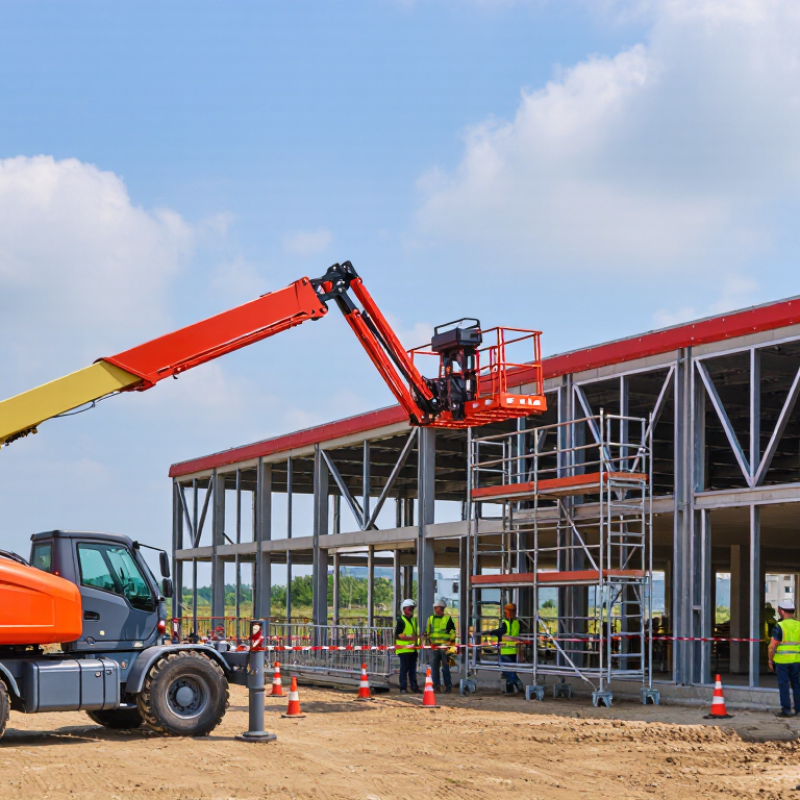
On site, its diesel engine and rough-terrain chassis can suit outdoor work where ground conditions are uneven and electric charging is impractical. The telescopic boom reaches outward as well as upward, helping crews position a platform near steel frames, roof edges, or building façades. Reach is not unlimited. The load, boom angle, and ground slope affect where the platform can safely operate.
Safety deserves equal attention. IPAF’s Global Safety Report 2024 reviews powered-access incident reports and identifies recurring hazards, including falls, entrapment, and electrocution. These are practical reminders to assess the work area, train operators, and follow the manufacturer’s operating instructions. That matters.
A machine’s advertised height alone cannot tell you whether it suits a specific job. Check horizontal outreach, platform capacity, machine width, and stabilisation requirements. Then compare those figures with the actual worksite. A detail can be missed. Even experienced teams may focus on height and overlook access routes or overhead obstructions. Understanding the machine’s capabilities—and its limits—makes equipment selection more reliable.
Definition: A 22 m Working Height and the MEWP Classification
A 22 m telescopic diesel boom lift is a mobile elevating work platform (MEWP) with a telescoping boom and a stated working height of about 22 metres. Working height is not usually the height of the platform floor. A common industry convention adds roughly 2 metres to platform height, making the platform’s maximum elevation about 20 metres. Actual figures vary by specification, so check the manufacturer’s stated platform height and outreach. The label is easy to misread.
Under IPAF’s MEWP classification, a self-propelled boom lift that can travel while elevated is generally Category 3b. “Diesel” describes its power source; it does not determine the MEWP category. The classification helps operators identify the machine type, but it does not tell them whether a particular setup can safely reach a work point. Ground slope, load, wind, and boom position matter. IPAF’s Global Safety Report 2024 collates reported incidents by event type, including falls, overturning, and entrapment. Those categories underline why height alone is a poor measure of safe access. Check the unit’s operating chart and site conditions before positioning it; I would verify the platform-height figure twice, because product labels can blur these distinctions.
