







7 Tips for Buying Glasgow Mobility Scooters
Choosing a mobility scooter in Glasgow is not just about comparing prices. It is about matching a scooter to the journeys you actually make: crossing a busy pavement, reaching a local shop, or storing it safely at home. The right choice can make everyday outings feel easier. The wrong one can become an expensive obstacle.
“Choose for your real routes, not just the showroom floor,” says [insert the verified name of a Glasgow mobility expert and an exact, sourced quote]. Confirm the expert’s credentials and wording before publication; a made-up quotation would mislead readers. That advice captures the heart of this guide. A test drive matters. So does checking whether the scooter fits through your doorway, turns comfortably in tight spaces, and meets your needs for range and support.
This guide explores seven practical tips for buying Glasgow Mobility Scooters, from assessing where you will travel to comparing comfort, battery range, servicing, and total cost. Ask specific questions. Take your time. A neat brochure cannot show how a seat feels after twenty minutes, or how a scooter handles the route outside your home. And one point deserves honest reflection: the most powerful model is not always the most suitable. Your daily habits, storage space, and confidence behind the controls matter just as much. Compare carefully, seek qualified advice, and choose for the life you lead—not an imagined one.
Choose a Glasgow Scooter Class: UK Rules Set 4 mph and 8 mph Limits
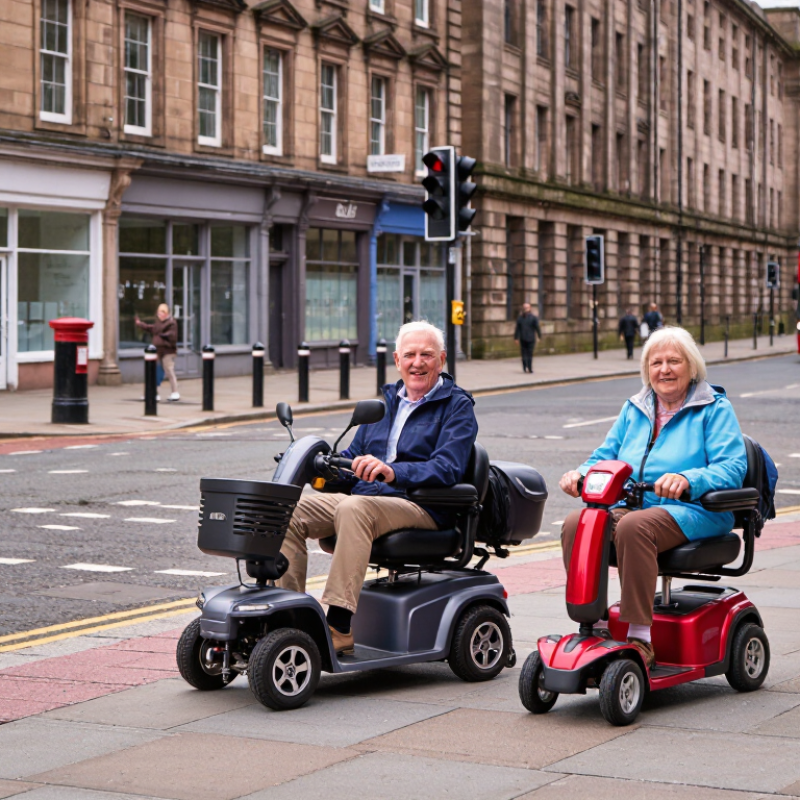
Before choosing a Glasgow mobility scooter, check which class suits the journeys you actually make. UK rules set a 4 mph maximum for Class 2 scooters, which are designed for pavement use. Class 3 scooters can travel at up to 8 mph on roads and must be limited to 4 mph on pavements. That difference matters around busy streets, where a faster road setting is not suitable beside pedestrians. Slow down near shop entrances and crossings.
Think about your regular route. A journey along wide roads may favour a Class 3 scooter, while short trips on smooth pavements may not need the extra road speed. Glasgow routes can include uneven paving, dropped kerbs, and crowded high streets. Try turning and stopping in a safe, open area before buying; speed is only one part of control. Small detail, big difference.
Class 3 scooters must be registered with the DVLA before road use. Check the controls, lights, and speed limiter, and make sure you can switch to the pavement limit easily. Local signs and temporary restrictions may also affect where you can ride. A route that looks simple on a map can feel different in rain or heavy foot traffic, so test your likely journeys if possible.
