







How to Find the Best 4 Wheel Drive Forklift for Sale?
Choosing the right 4 wheel drive forklift for sale is not simply a matter of comparing prices. The machine must match your ground conditions, lifting tasks, working hours, and maintenance capacity. A forklift that performs well on a warehouse floor may struggle badly on loose gravel, wet concrete, or uneven loading yards.
Materials-handling consultant David Goss explains, “Four-wheel drive improves access, but it does not replace correct capacity planning, operator training, or site assessment.” That point deserves attention. Buyers should check rated capacity, lift height, turning radius, tire type, ground clearance, and attachment compatibility. A 5,000-pound capacity may sound sufficient, yet the real limit changes when the load is raised or extended. Small details matter.
Inspect the mast for leaks, listen for unusual transmission noise, and examine tire wear across both axles. Request service records, not only sales promises. For used equipment, test cold starting, braking, steering, hydraulics, and four-wheel drive engagement. New forklifts also require careful comparison because specifications can hide costly differences.
Budgeting only for the purchase is an easy mistake. Fuel use, tires, batteries, repairs, insurance, and operator training affect the total ownership cost. I would not ignore resale value either. Sometimes the cheapest option becomes the most expensive machine on the site. This guide will examine practical buying criteria, common warning signs, and questions to ask before choosing a 4 wheel drive forklift for sale. One overlooked measurement can change everything.
Define the Job: Load Weight, Lift Height, Terrain, and Duty Cycle
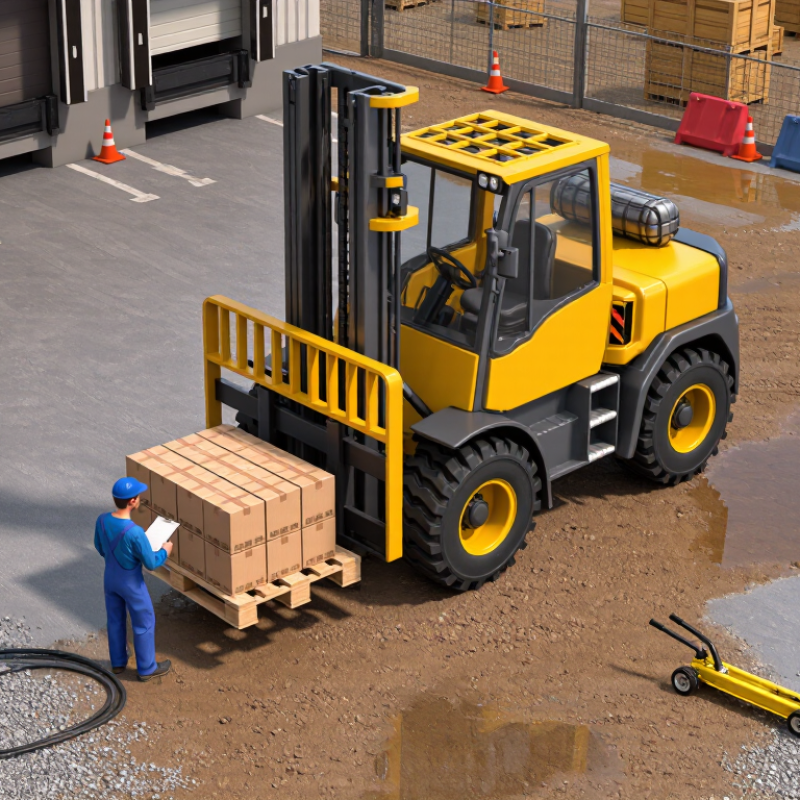
A suitable 4 wheel drive forklift starts with the actual load, not the advertised capacity. Record the heaviest pallet, its dimensions, and the attachment used. A 5,000-pound rating may decrease when the load sits far from the carriage. Check the capacity chart at your required lift height. Ask for the data plate and service records. Guessing here can create an expensive and unsafe mismatch.
Lift height also affects stability and daily efficiency. Measure the highest rack beam, doorway, and storage platform. Leave clearance for uneven floors and changing loads. Then examine the terrain. Mud, gravel, wet grass, and broken concrete demand strong ground clearance, suitable tires, and predictable traction. Four-wheel drive helps, but it cannot replace careful speed control. Test the forklift on the surface where it will actually work.
Duty cycle reveals whether the machine can handle the schedule. Occasional loading may need less cooling capacity than continuous yard work. Count operating hours, travel distance, idle time, and shifts per day. Inspect steering response, brakes, mast movement, tires, leaks, and warning systems. A practical trial with a real load is more useful than polished photographs. I would also question my first estimate, because seasonal mud or heavier pallets can change the whole purchase decision. Assume conditions will be slightly worse than planned.
