













Which HDPE Floaters Are Best for Buyers in 2026?
Choosing Hdpe Floaters in 2026 is not just a matter of comparing prices. Buyers need to match float design, material quality, and load capacity to the site. A sheltered fish farm, a tidal marina, and a floating pipeline place very different demands on buoyancy and connections. Small details matter: wall thickness, sealed chambers, UV resistance, and the way modules join. One weak joint can compromise an otherwise sturdy platform.
The market has a clear operational context. The FAO’s The State of World Fisheries and Aquaculture 2024 reports 94.4 million tonnes of farmed aquatic animals produced globally in 2022. That scale helps explain why dependable floating infrastructure matters, though it does not prove which product is best. Buyers should compare verified specifications, material traceability, warranty terms, and documented performance in similar water conditions. Ask for load ratings and inspection guidance, not just attractive brochures. Look closely.
There is no universal winner. Some buyers may value modular replacement; others need greater stability, easier transport, or lower maintenance. A low upfront price can look persuasive, yet lifetime cost depends on repairs, downtime, and service access. It is worth admitting that product claims are not always easy to compare across suppliers. This guide evaluates the practical trade-offs and the evidence buyers should request before selecting Hdpe Floaters for 2026.
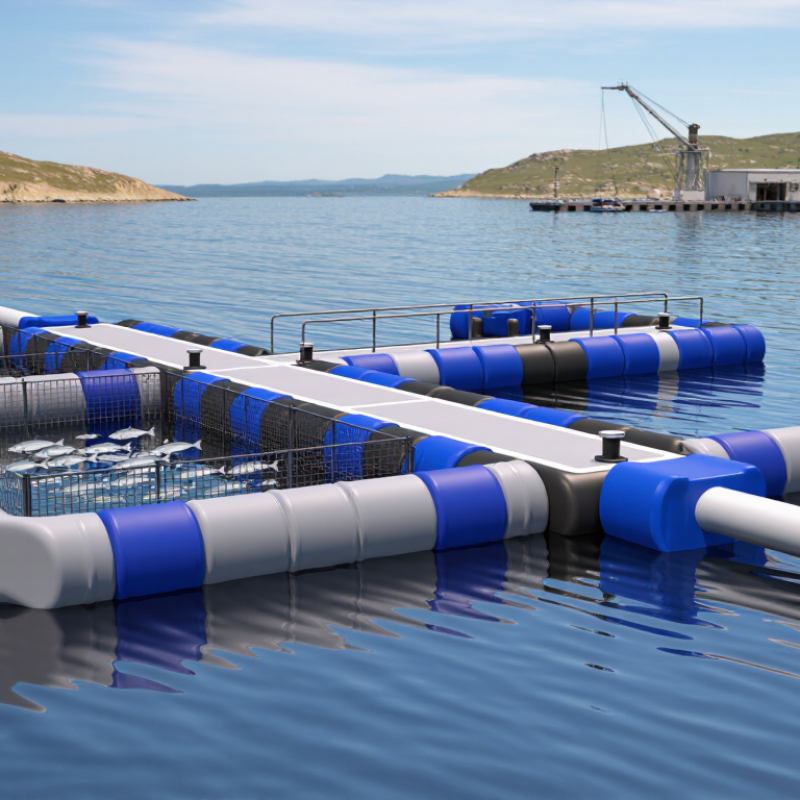
What HDPE Floaters Are: PE Density 0.941–0.965 g/cm³ vs Seawater at ~1.025
HDPE floaters are buoyant because polyethylene is less dense than seawater. Typical HDPE density ranges from 0.941 to 0.965 g/cm³, while seawater is about 1.025 g/cm³. In simple terms, each litre of solid HDPE displaces heavier water than its own mass. The theoretical difference is roughly 60–84 grams per litre. That matters. Actual performance depends on the floater’s shape, wall thickness, sealed volume, and load.
A hollow unit can support far more weight than its plastic shell alone suggests, because trapped air adds displacement without much mass. But density is not a complete buying specification. Check rated buoyancy, working load, dimensions, and how the unit performs when partly submerged. Salinity and temperature also shift seawater density slightly. A small difference can affect reserve buoyancy across a large installation. I used to treat density as a quick pass-or-fail figure; that was too simplistic.
Tips: Compare net buoyancy, not just material density. Ask for test data under stated loading conditions, and leave a practical safety margin. Inspect seams and attachment points, too. A neat specification sheet cannot show every weak spot. That is worth remembering.
