














China Best Poultry Slaughtering Line Spare Parts?
Choosing the best poultry slaughtering line spare parts in China is not just a price comparison. It is a decision about uptime, food safety, and service support. Small details matter. A worn shackle, dull blade, or poorly fitted conveyor link can interrupt an entire shift.
The scale of the sector makes reliability especially important. China’s National Bureau of Statistics reported poultry meat output of about 25.6 million tonnes in 2023, up 4.9% from the previous year. The OECD-FAO Agricultural Outlook 2024–2033 also identifies poultry as a major driver of projected growth in global meat production. These figures do not prove that any one supplier is best. They do show why processors need parts that match their line speed, bird size, sanitation routines, and maintenance schedule.
This guide examines Poultry Slaugtering Line And Spare Parts through practical buying criteria: material grade, dimensional accuracy, wear life, traceability, and replacement availability. It also considers parts used in scalding, defeathering, evisceration, chilling, and conveying. Ask for drawings, sample inspection records, and clear compatibility details before ordering. A polished catalogue is not enough. A supplier may appear strong on paper but still disappoint when an urgent component is unavailable; that risk deserves honest attention. No single brand fits every plant, so the “best” choice should be verified against real operating conditions and documented support.
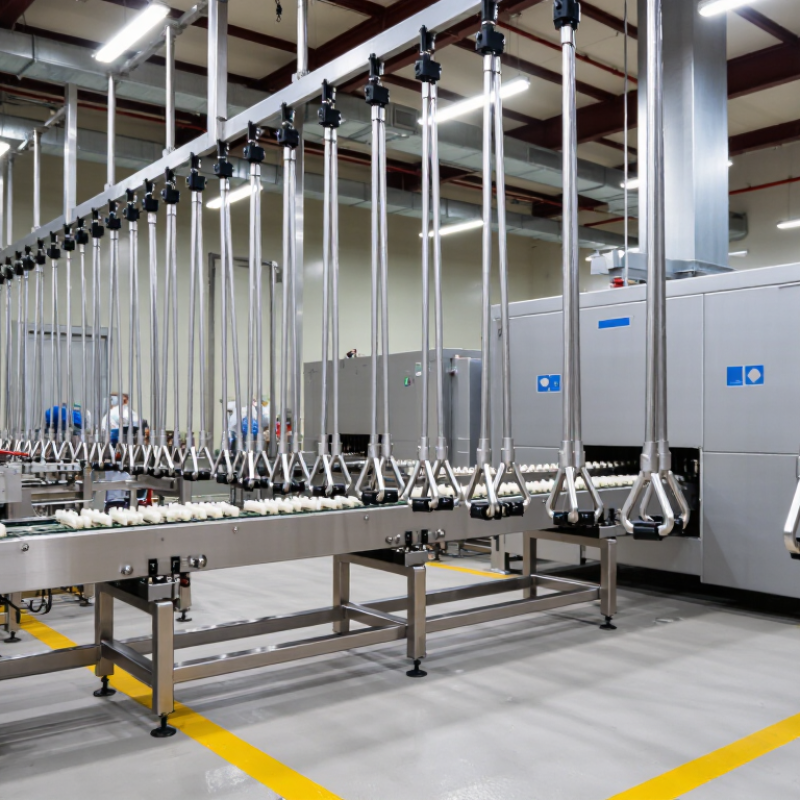
What Defines Quality Poultry Slaughter Line Spare Parts in China?
China Best Poultry Slaughtering Line Spare Parts?
What Defines Quality Poultry Slaughter Line Spare Parts in China?
Quality starts with a part that fits the actual line, not just a catalogue drawing. Check dimensions, mounting points, material specifications, and surface finish against the machine in use. Stainless components should resist corrosion and allow thorough cleaning. Conveyor bearings, shackles, and cutting components also need to suit their expected loads and operating speeds. Ask for material records, inspection details, and clear drawings before ordering. A low price means little if the part wears quickly or causes repeated stoppages.
Tips: Measure the old part, photograph its installation, and confirm the revision number. Keep a sample for comparison when possible. Small mismatches matter.
Reliable suppliers can explain how parts are inspected and what tolerances they hold. Request a sample or trial fit for critical components, then observe performance during normal production. Listen for unusual vibration and check for uneven wear after operation. Documentation helps, but real-world fit matters too. A polished sample can still disappoint. No checklist catches every issue, and that is worth remembering. Good communication about lead times, replacement intervals, and any design changes also makes maintenance planning more dependable.
