


















10 Best Rail Freight Companies for Global Shipping
Rail Freight remains a practical choice for moving large volumes across long distances. It can connect inland production centers with ports and distribution hubs, often using less fuel per tonne than road transport. But a rail journey rarely tells the whole story. Border procedures, terminal capacity, and the first and last miles can change a shipment’s cost and timing.
“Rail is the most sustainable mode of transport,” said Jean-Pierre Loubinoux, former Director General of the International Union of Railways. That perspective helps explain rail’s appeal, though sustainability alone cannot determine the right carrier. Shippers also need to examine network reach, transit-time consistency, cargo visibility, intermodal services, and customer support. A polished route map is useful. Reliable execution matters more.
This guide reviews 10 rail freight companies serving global shipping needs. It considers where each provider operates, how its services fit different supply chains, and what details businesses should verify before requesting a quote. Capabilities and schedules can vary by route, season, and available capacity, so treat any comparison as a starting point—not a guarantee. Small details count: a missed transfer can leave a container waiting at a terminal. There is no perfect ranking for every shipment. The right partner depends on cargo, origin, destination, budget, and required delivery window. Some comparisons may still miss local conditions; checking directly with providers remains essential.
How Rail Freight Supports Global Shipping
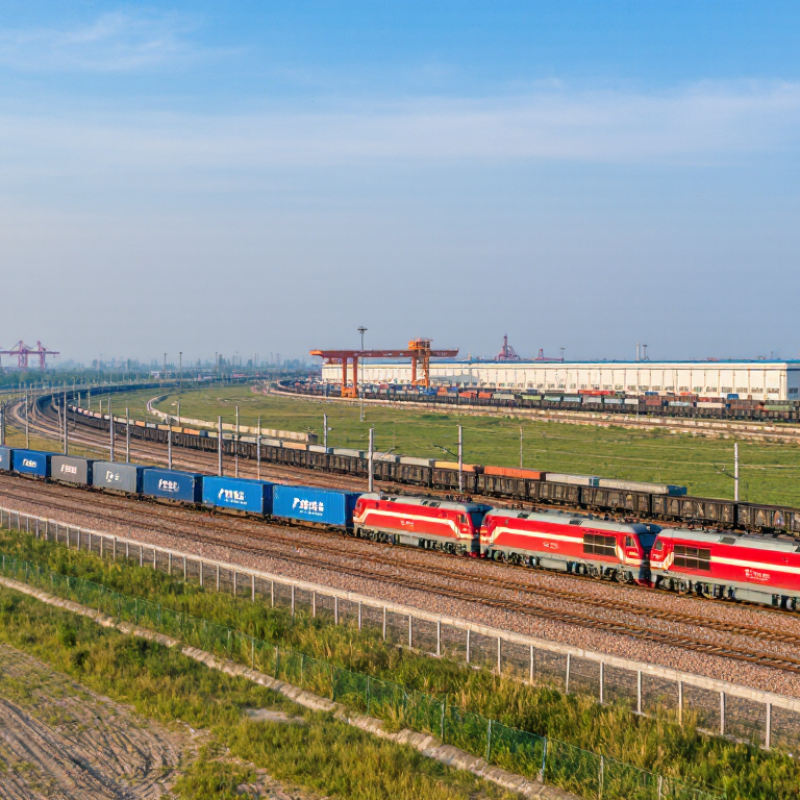
Rail freight supports global shipping by carrying containers between seaports, inland terminals, and industrial hubs. A container unloaded from a ship can move by train across long inland corridors, then transfer to trucks for final delivery. This creates a practical link between ocean routes and destinations far from the coast.
The International Energy Agency’s The Future of Rail (2019) reports that rail carries about 8% of global passenger and freight transport, while using roughly 2% of transport energy.
That efficiency can help reduce shipping’s transport footprint, especially on busy land corridors.
Rail also offers substantial capacity and avoids some road congestion. Trains can move many containers in one scheduled journey, while terminals provide places to consolidate cargo and coordinate transfers.
But the handoff matters. A missed train, crowded terminal, or slow border process can erase time gains, so shippers need realistic schedules and clear tracking.
Rail is not magic.
It works best when routes, equipment, and port connections align; not every origin has that access. The IEA’s figures are global averages, too, and do not guarantee lower emissions for every individual shipment.
A short feeder journey or poorly loaded train may change the result. Those details deserve more attention than glossy transit-time promises.
