








What Is the Best Smart Glucose Meter in China?
Choosing the best Smart Glucose Meter in China requires more than comparing screen size, app design, or advertised accuracy. A reliable choice should fit real daily routines, from early-morning fingertip testing to carrying test strips during humid summer commutes. Users should examine measurement units, sample volume, result time, Bluetooth stability, and battery performance. Small details matter.
Clinical usefulness comes first.
A trustworthy evaluation should consider NMPA registration, published accuracy data, and clear instructions in Chinese. It should also examine whether the meter follows recognized performance standards, including ISO 15197 where applicable. Doctors, diabetes educators, and experienced users can provide valuable context, but their recommendations may not suit every patient. A person using insulin may need different features from someone monitoring occasional lifestyle changes. Data sharing with healthcare professionals can help, yet privacy policies deserve careful reading.
No device is perfect.
Some meters pair smoothly but consume phone battery quickly. Others offer excellent readings but use expensive or inconvenient strips. App translations may feel awkward, and customer support can vary between cities. These weaknesses should not be hidden behind polished marketing. This guide compares practical performance, clinical credibility, total ownership cost, and user experience to identify the strongest options in China. It also recognizes an important limitation: independent long-term comparisons remain uneven. Readers should confirm current registration, pricing, strip availability, and medical suitability before purchasing. A glucose meter supports informed decisions; it does not replace professional diagnosis or treatment.
What Is a Smart Glucose Meter and How Does It Work?
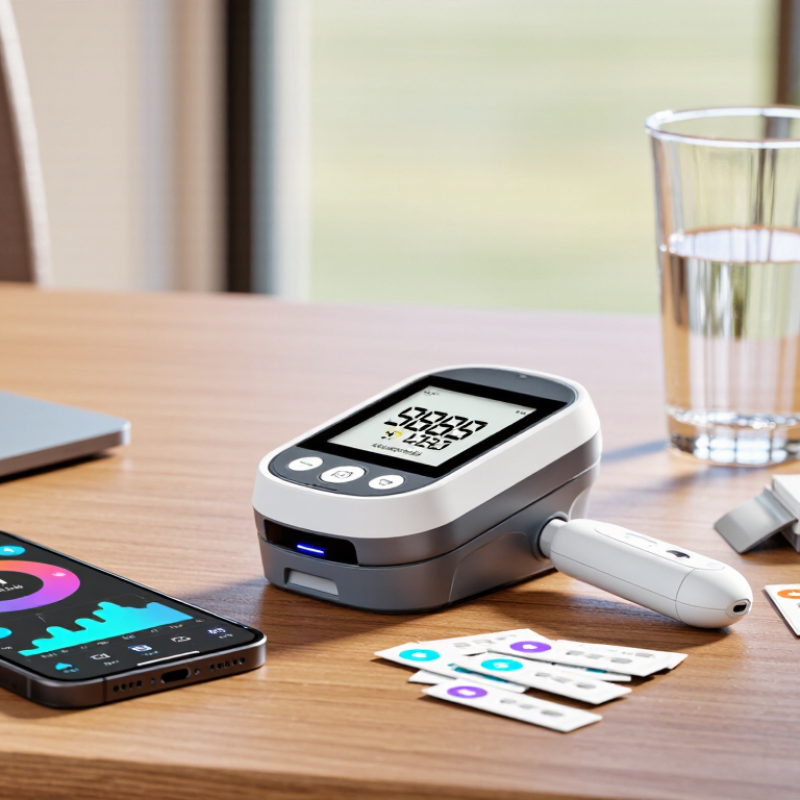
A smart glucose meter is a blood glucose testing device with digital connectivity. It usually uses a disposable test strip, a small blood sample, and an electrochemical sensor. The meter reads the electrical reaction and estimates glucose concentration within seconds. Simple, but not magic.
Many connected meters send results to a mobile application through Bluetooth or another wireless connection. The app can display trends, testing times, meals, medication notes, and unusual readings. Some systems provide reminders or warnings when readings move outside personal targets. These features may help users notice patterns, especially during busy workdays or travel. However, an app cannot replace clinical judgment. Its predictions depend on accurate input and reliable software.
In China, buyers should check testing certification, instructions, storage requirements, and after-sales support. A professional review should also consider measurement consistency, strip availability, battery life, and data protection. In practice, washing and drying hands matters because sugar residue can distort a result. Expired strips can mislead. Results may also differ slightly from laboratory measurements, so repeated unexpected readings deserve medical advice.
The technology is useful, though not flawless. I would compare readings with symptoms instead of trusting one number blindly. A smart meter should support informed decisions, not make them alone. Manufacturers could explain algorithm limits more clearly; many users may assume a polished graph means perfect accuracy.
