















China Best Roll Filter Media Suppliers for Global Buyers?
Global buyers comparing China Best Roll Filter Media Suppliers for Global Buyers? should look beyond price sheets and polished factory photos. Roll Filter Media must fit the equipment, airflow, dust load, and replacement schedule. A roll that looks uniform under warehouse lights can still vary in thickness or pressure drop across its width. Small details matter.
Grand View Research estimated the global air filters market at USD 15.31 billion in 2023 and projected a 7.2% compound annual growth rate through 2030. This figure covers the broader air-filter market, not roll media alone, so it should not be treated as a direct measure of media demand. It does, however, show why buyers need reliable specifications and consistent supply. Aerosol scientist Dr. William C. Hinds, author of Aerosol Technology, provides a useful technical lens: filtration performance depends on particle behavior and the conditions in which a filter operates.
A practical supplier review should examine fiber composition, basis weight, thickness, initial pressure drop, dust-holding capacity, and test methods. Ask for recent batch records and samples. Then check whether the reported results match your intended airflow and operating environment. A neat certificate is not enough. Some specifications remain difficult to compare across suppliers, and buyers should say so rather than assume equivalence. This guide examines supplier selection, quality checks, communication, and shipping considerations, helping global purchasers assess Chinese Roll Filter Media suppliers with clearer questions and more grounded expectations.
Understanding Roll Filter Media and Its Industrial Applications
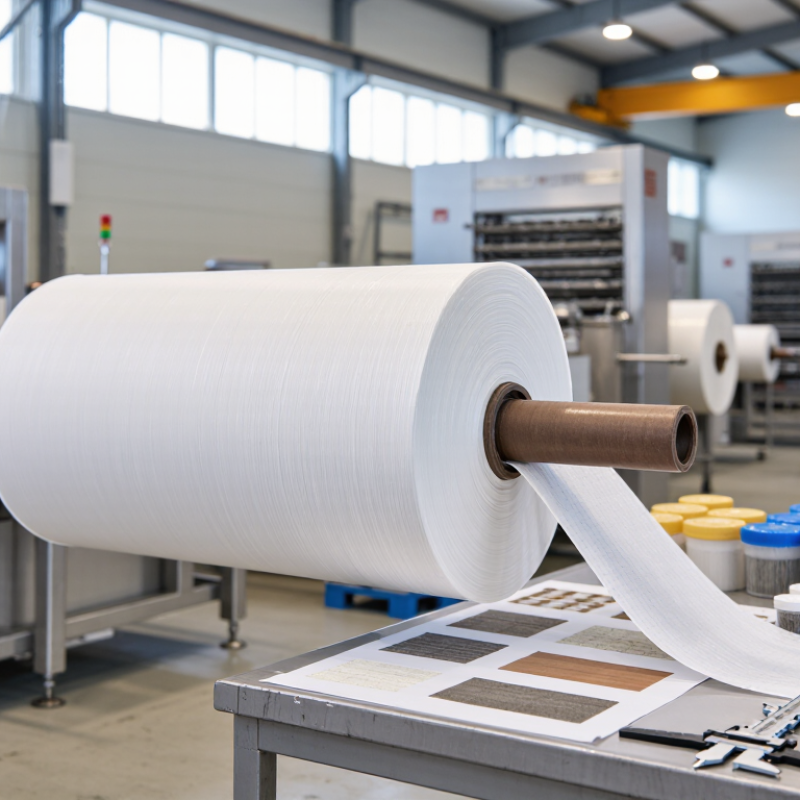
Roll filter media is a continuous sheet of fibrous material supplied on a core. It advances through a filtration system as dust or droplets collect on its surface. When the loaded section reaches a set pressure drop, the media moves forward and exposes a clean area. Simple in principle. The real performance depends on the application.
In ventilation systems, roll media can capture airborne dust before it reaches fans, coils, or occupied work areas. In paint booths and manufacturing lines, the required fiber structure and media depth may differ. A coarse pre-filter can protect downstream filters, while finer media can capture smaller particles. Operators should consider airflow, dust load, humidity, and replacement frequency together. A filter that is too restrictive may increase energy use.
Selection should be based on operating conditions, not efficiency claims alone. Check the media’s pressure drop, dust-holding capacity, dimensions, and compatibility with the equipment. Inspect used media, too; uneven loading can point to airflow problems or poor installation. One detail is easy to miss: local dust conditions change over time. Regular monitoring helps, though it cannot replace good system design.
