
















China Top 10 AD Plasma Biomarker Suppliers
Alzheimer’s disease (AD) plasma biomarkers are reshaping how researchers study disease risk and progression. A small blood sample can be tested for signals such as p-tau217, p-tau181, Aβ42/40, GFAP, and neurofilament light. Yet a promising marker is not automatically a reliable test. Results depend on assay design, sample handling, measurement limits, and validation in relevant populations.
A careful principle, consistent with Alzheimer’s biomarker researcher Dr. Kaj Blennow’s published work, is that blood-based markers require rigorous analytical and clinical validation before interpretation. This is a paraphrase, not a verbatim quotation. Important distinction. For buyers, a supplier’s technical documentation matters as much as its product list. Ask how the assay performs across batches, what sample conditions it supports, and whether independent studies support its intended use. Look closely at quality controls, detection ranges, and evidence for reproducibility. A polished specification sheet alone is not enough.
This “China Top 10 AD Plasma Biomarker Suppliers” overview can help readers compare manufacturers and research-service providers by product scope, assay technology, documentation, support, and consistency. Some suppliers may focus on kits; others may offer custom testing or broader laboratory services. Those differences matter. The strongest fit depends on the study, not the longest catalog. This comparison is a starting point, not an endorsement or a substitute for technical review. Researchers should verify current product details directly with each supplier. Small protocol differences can change the readout. That deserves attention.
Understanding Alzheimer's Disease Plasma Biomarkers
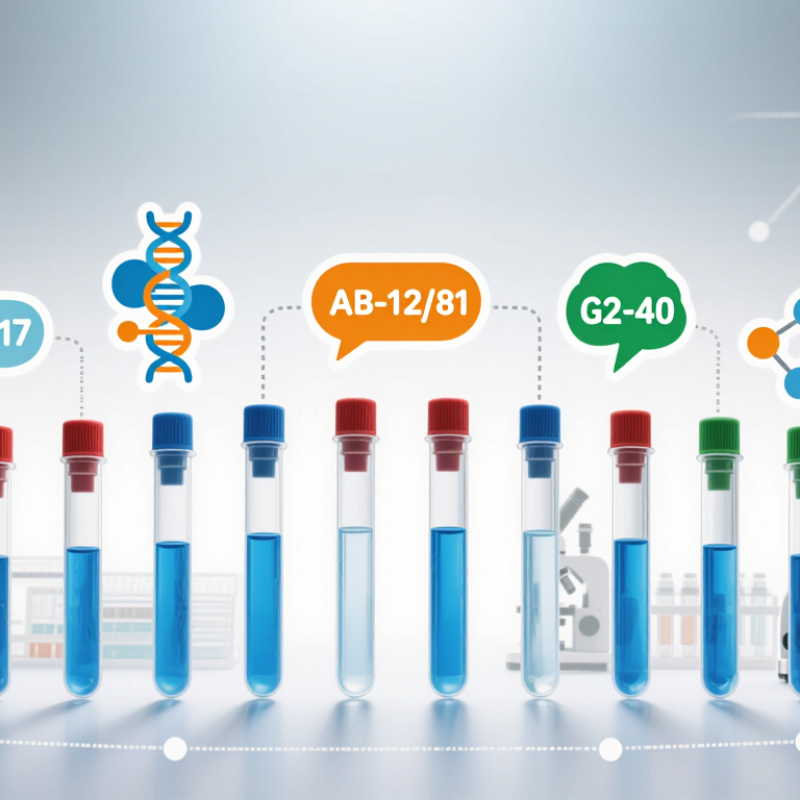
Alzheimer’s disease plasma biomarkers are measurable signals in blood that may help clinicians assess changes linked to the disease. They include amyloid-beta 42/40 ratios and phosphorylated tau proteins, such as p-tau217. Neurofilament light can indicate nerve-cell injury, but it is not specific to Alzheimer’s. These markers answer different questions. They do not tell the whole story.
A practical example is a blood sample collected during a clinic visit. Its results may support decisions about further assessment, alongside symptoms, medical history, and, when appropriate, brain imaging or spinal-fluid tests. They should not be treated as a diagnosis on their own. Age, kidney function, sample handling, and laboratory methods can affect interpretation. Small differences between assays matter. Researchers and laboratories therefore need clear validation data, careful quality controls, and transparent reporting. For anyone comparing test providers, published performance evidence is more useful than broad claims. The field is promising, but not settled. I would be cautious about treating one number as a verdict; biology rarely fits so neatly. A result still needs a trained professional to interpret it in context.
