









China Top Pallet Truck Seals Manufacturer and Supplier?
China’s pallet truck industry serves warehouses, factories, and distribution centers where equipment faces dust, moisture, oil, and repeated movement. Pallet Truck Seals help protect hydraulic components from leakage and contamination. Their dimensions, elastomer type, hardness, and operating temperature can affect service life. Small differences matter. A seal that looks correct on a workbench may still fail after installation if its groove, pressure range, or shaft condition is unsuitable. There is no universal seal for every truck.
For buyers comparing Chinese manufacturers and suppliers, useful questions go beyond price. Can the supplier confirm drawings and tolerances? Are material options and inspection methods clearly documented? Can samples be checked against the actual pallet truck model before a larger order? These details help reduce avoidable fit problems. They also make supplier claims easier to assess. Experienced manufacturers may support custom profiles, but customization should follow measured requirements, not guesswork. That distinction is important.
This guide explores how to evaluate product quality, technical support, production consistency, and communication when sourcing from China. It also considers the limits of catalog descriptions. A polished listing cannot replace a dimensional check or a clear test record. Ask how measurements are taken, and request details about material and testing where relevant. No supplier is right for every application. Buyers should compare evidence, ask practical questions, and keep an open mind when specifications are incomplete. Careful sourcing takes time.
What Pallet Truck Seals Are and Where They Are Used
China Top Pallet Truck Seals Manufacturer and Supplier?
What Pallet Truck Seals Are and Where They Are Used
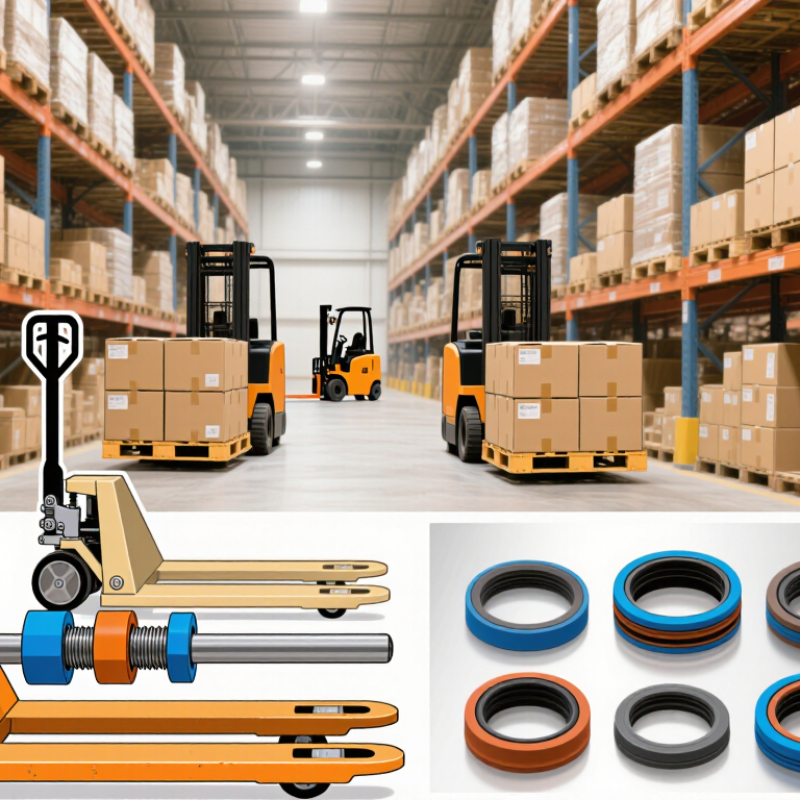
Pallet truck seals are small components that keep hydraulic oil inside working parts and block dust, grit, and moisture. They are commonly fitted around pump pistons, cylinder rods, valves, and connections. On a manual pallet truck, a worn seal may cause the forks to sink under load or rise slowly. You may also spot a thin oil film near the pump. Small parts matter.
Seals work in warehouses, loading bays, workshops, and distribution centers, where trucks face repeated lifting, turning, and contact with rough floors. Cold rooms and dusty storage areas can add extra stress. Material Handling Industry’s 2024 Annual Industry Report found that 55% of respondents planned to increase supply-chain technology investment over the next five years. That figure is not specific to seals, but it reflects the wider focus on dependable equipment and uptime. A seal cannot fix a bent rod or damaged cylinder; replacing it without checking the cause may only delay another failure.
Tips: Match the seal to the truck’s model and hydraulic system, and check the rod for scratches before fitting it. Use clean tools and the correct fluid. If the leak returns, inspect the pump and cylinder rather than changing seals repeatedly. Some wear is easy to miss. That deserves a second look.
