







How to Choose the Right Pallet Rack for Your Warehouse
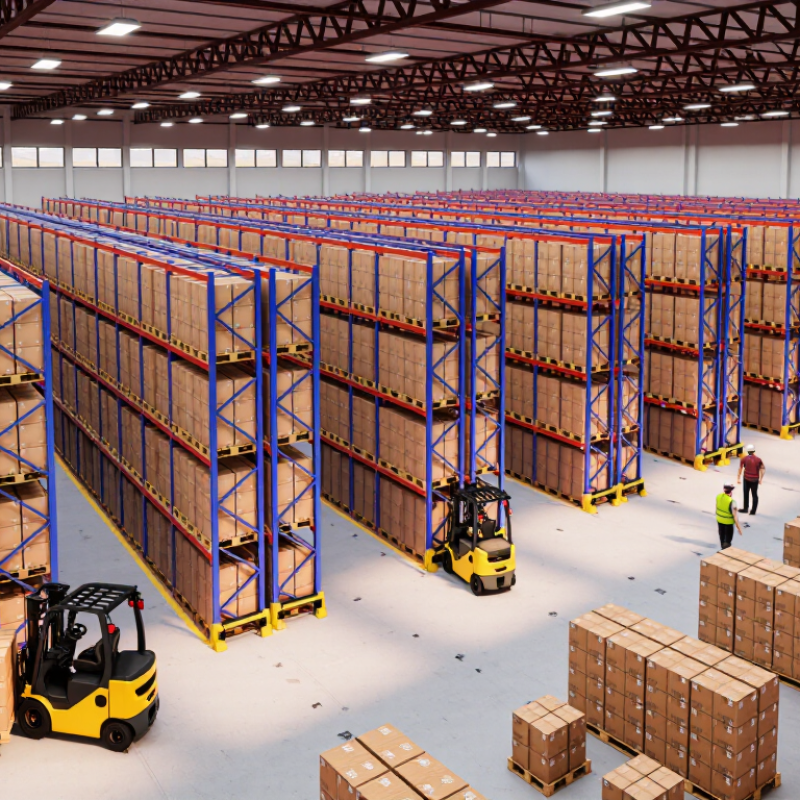
Choosing the right Pallet Rack system starts with what your warehouse actually stores. Measure the heaviest pallet, its dimensions, and the clear height beneath sprinklers and lights. Then look at how forklifts turn, where workers walk, and how often inventory moves. A rack that looks efficient on a plan can feel cramped when a forklift carries a wide load through a busy aisle. Small details matter.
“Choose the rack around the load and the work—not the other way around.” That practical rule reflects guidance from the Rack Manufacturers Institute (RMI), whose technical resources cover rack design, inspection, and safety. It is a useful reminder, not a substitute for a site-specific review. No two warehouses operate exactly alike.
This guide will help you compare selective, drive-in, push-back, and other Pallet Rack options. You’ll consider storage density, access speed, load capacity, building constraints, and future changes. Check beam ratings and frame condition, and make sure the system matches the pallets and handling equipment in use. A detail that is easy to overlook: existing floor conditions can affect installation and anchoring decisions. The right choice is rarely the tallest rack or the tightest aisle. It should fit the daily workflow, with room for safe access and adjustment. Sometimes the first layout needs rethinking. That’s normal.
Measure Pallets and Loads, Using the 48 × 40-Inch GMA Pallet as a Baseline
A 48 × 40-inch GMA pallet is a useful starting point, not a universal fit. Measure the pallets actually used in your warehouse, including any load that extends beyond the edges. A few inches of overhang can affect clearance and safe handling. Measure twice.
Record the loaded height from the floor to the highest point, including the pallet, and weigh the heaviest typical load. Note whether weight sits evenly across the pallet or concentrates near one side. Rack capacity depends on how loads are supported, not just their total weight. Small errors matter.
Use these measurements when comparing rack bay openings, beam levels, and aisle clearances. Leave room for forklifts to place and retrieve loads without scraping uprights or neighboring pallets. Confirm required clearances and capacities with a qualified rack professional; conditions vary by rack design and handling equipment. The standard pallet is only a baseline. Odd-sized loads, bowed boards, and inconsistent stacking can complicate a neat plan, so check representative loads rather than relying on a single sample.
How to Choose the Right Pallet Rack for Your Warehouse - Measure Pallets and Loads, Using the 48 × 40-Inch GMA Pallet as a Baseline
| Measurement or Check | 48 × 40-Inch GMA Baseline | How to Use It When Selecting Rack | Example or Planning Note |
|---|---|---|---|
| Pallet footprint | 48 in × 40 in (1219 × 1016 mm) | Measure the actual pallet and identify which side will face the aisle and rest across the beams. | The 48 × 40-inch size is a common North American pallet footprint, not a guarantee that every pallet or load matches it. |
| Loaded footprint | Measure the widest and deepest points of the palletized load. | Use the load’s full footprint, including cartons, stretch wrap, and any permitted overhang, to check bay fit and clearances. | A load that extends beyond the pallet can reduce the usable clearance between adjacent loads or rack components. |
| Pallet orientation | Either 48 in or 40 in may face the beams, depending on the pallet, load, and handling method. | Choose the orientation before setting beam length and frame depth; confirm that the pallet is supported as intended. | Changing orientation changes the required bay width and rack depth. |
| Rack depth | For a 40 in pallet depth, a 42 in rack depth is a common planning arrangement. | Check the intended front and rear pallet overhang, pallet support, load profile, and rack system requirements. | Do not assume 42 in is suitable for every load or rack design; verify the final layout with a qualified rack designer. |
| Beam length and pallets per bay | Two pallets placed 48 in wide across the beams require more than 96 in of beam length to allow separation and clearance. | Set beam length from the actual pallet orientation, number of pallet positions, load width, and required gaps. | A roughly 102–108 in span can be an initial planning range for two 48 in-wide positions; confirm dimensions and system compatibility before ordering. |
| Load height and vertical clearance | Measure from the floor to the top of the loaded pallet, including unstable or protruding items. | Use the loaded height to plan beam elevations, handling clearance, and the space required below overhead building services. | Allow for the lift truck’s placement needs and check applicable building, fire-protection, and local requirements. |
| Load weight | Record the maximum gross weight per pallet position, including the pallet and packaging. | Match the planned loads to the rated capacity of the specific beams, frames, and complete rack configuration. | There is no single universal rack capacity; capacity depends on the components, dimensions, configuration, and loading conditions. |
| Load distribution and pallet condition | Check that the load is stable and the pallet is in serviceable condition. | Confirm that loads are placed consistently and that pallet support points align with the rack design. | Damaged pallets, uneven loads, or unsupported pallet edges can create unsafe storage conditions. |
| Forklift aisle width | Not determined by pallet footprint alone. | Use the lift truck’s turning and handling specifications, load dimensions, and the planned operating method. | Confirm aisle requirements with the truck specifications and an on-site layout review. |
Planning guide: verify final dimensions, rated capacities, clearances, and installation requirements for the specific rack system and warehouse before use.
