










How to Choose Large Outdoor Ceramic Flower Pots
Outdoor containers do more than hold soil. They frame an entryway, soften a patio, and face sun, rain, and seasonal temperature changes. Choosing ceramic flower pots large outdoor spaces need takes more than matching a color to a cushion.
The National Gardening Association’s 2022 National Gardening Survey estimated that 80% of U.S. households participated in lawn and garden activities in 2021. Its findings reflect how common home gardening has become, but they do not guarantee that every container suits every climate or plant. The Garden Media Group’s 2024 Garden Trends Report offers additional context on evolving gardening habits and design preferences. Together, these industry sources make one point clear: outdoor pots are practical choices as well as visual ones.
Details matter. A broad rim can make watering easier; a narrow base may feel unstable on a windy deck. Check the pot’s drainage hole, weight when filled, and whether its glaze and material are rated for outdoor conditions. A beautiful pot can still disappoint. Ceramic may chip, retain moisture, or become difficult to move once planted, and product claims vary. I would not choose by appearance alone.
This guide explains how to compare size, shape, finish, drainage, durability, and placement. It also considers the plant’s mature root system and the surface beneath the pot. Small measurements help. A tape measure and a careful look at local weather can prevent an expensive mismatch.
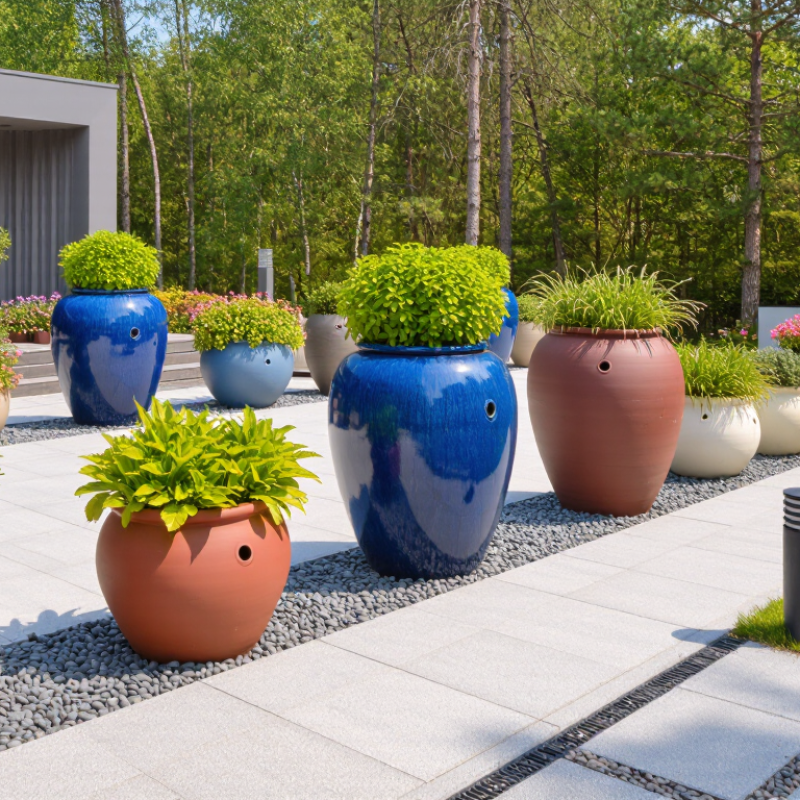
Identify the Planting Needs and Outdoor Location
Match the pot to the plant’s roots and watering needs, not just its height. Check the expected root spread and mature size; a narrow, deep container suits some plants, while shallow-rooted herbs may do better in a wider shape. Leave room for new growth without surrounding a small root ball with a huge volume of wet soil. Drainage holes matter. If the pot has none, water can collect and stress roots, especially after heavy rain. A glazed interior may hold moisture longer, while unglazed ceramic can dry faster in sun and wind. Check the soil rather than following a fixed watering schedule.
Study the outdoor spot at different times of day. Note direct sun, reflected heat from walls, prevailing wind, and where rainwater runs. Wind matters. A tall plant in a broad pot can still tip, but a filled ceramic pot is difficult to move, so test the empty pot’s position first. Measure the path and doorway, too. I would recheck that detail; it is easy to overlook before adding soil. For cold climates, look for ceramic intended to withstand freezing conditions, and keep drainage clear so water does not sit inside. Small pot feet can lift the base from a wet patio, though they may make an already tall planter feel less stable.
