










How to Choose Paper Takeaway Containers for Your Business?
Choosing Paper Takeaway Containers is not a simple matter of picking the lowest price or the neatest-looking box. The right choice depends on what your business serves, how customers receive it, and how long the food must stay appealing. A hot curry needs different support from a chilled pastry. A sauce cup can expose a weak lid quickly. Small details matter.
Packaging researcher Dr. Susan Selke is a recognized expert in packaging, but I cannot verify a specific quotation from her about takeaway containers. Rather than invent one, this introduction uses a practical principle: “Choose packaging around the real journey from kitchen to customer.” That means checking container size, leak resistance, stacking stability, and how easily staff can pack orders during a busy service. It also means testing the actual food—not just an empty sample. Steam, grease, and waiting time can change how a container performs.
Paper options vary in construction, coatings, and suitability for different meals. Ask suppliers for clear product specifications, and compare samples under realistic conditions. Check whether lids fit securely and whether containers remain comfortable to carry. Then consider storage space and the pace of your service. A container that works beautifully on a display table may slow down a crowded lunch counter. That is easy to overlook.
No single option suits every menu. This guide will help you weigh practical trade-offs, ask better supplier questions, and choose Paper Takeaway Containers that fit your food and workflow. A little testing now can prevent avoidable frustration later.
Identify Your Business’s Packaging Needs
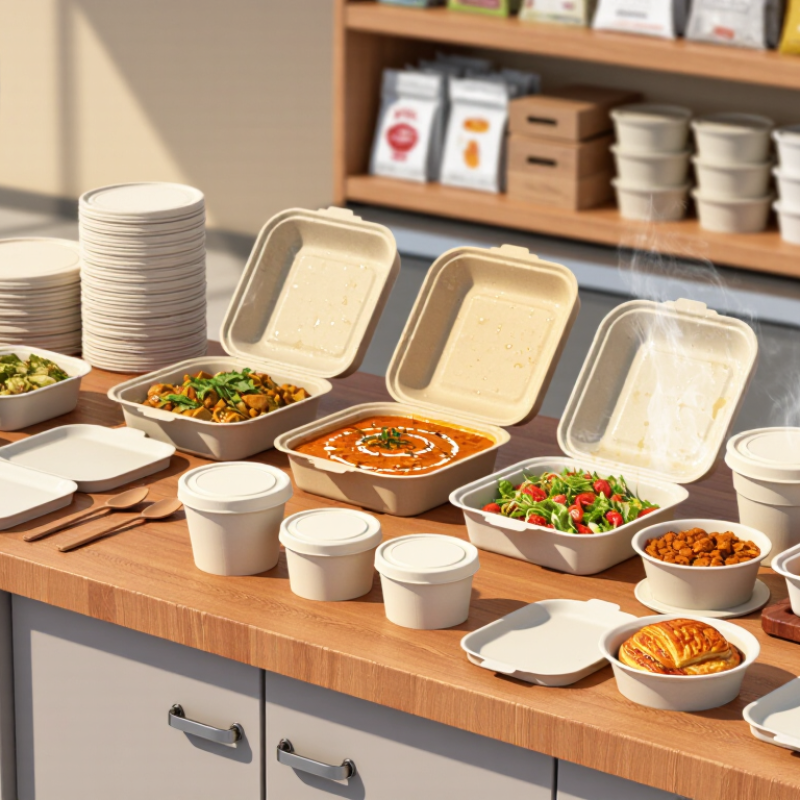
Before choosing paper takeaway containers, track what leaves your kitchen during a typical rush. Record the foods, portion sizes, sauces, and average travel times. A crisp salad and a hot curry need different interiors, even when their portions look similar. The National Restaurant Association’s 2024 State of the Restaurant Industry report says off-premises orders account for 75% of restaurant traffic. That volume makes fit and handling practical concerns, not small details. Start with your busiest menu items.
Test containers with real meals. Check whether steam softens the base, lids stay shut in a delivery bag, and sauces leak when the package tilts. Measure shelf space, too; oversized containers waste storage room and may slow packing. The first estimate is rarely perfect. A short trial can reveal what a catalog description cannot.
Budget for the whole workflow, not just the unit price. Compare how quickly staff can fill and close each format, and note whether sides need separate containers. The U.S. Environmental Protection Agency’s 2018 Facts and Figures report estimated that containers and packaging made up 28.1% of municipal solid waste by weight. That broad figure is a useful reminder to consider material use. Still, the right choice depends on your menu, portion control, and local waste-handling options. A simple packing log can expose awkward fits and unnecessary extras.
