











How to Choose the Best CNC Turning Service in 2026?

Choosing the right CNC Turning Service in 2026 requires more than comparing hourly rates. A reliable supplier should understand your material, tolerances, surface requirements, and production risks. The best partner can explain how a drawing becomes a stable, repeatable component.

Look closely at the equipment and process controls. Modern turning centers, live tooling, bar feeders, and automated inspection can improve consistency. However, advanced machinery alone proves little. Ask for inspection reports, material certificates, calibration records, and clear evidence of ISO 9001-based quality practices. A capable manufacturer should discuss spindle capacity, achievable tolerances, thread inspection, and heat-treatment coordination without hiding behind vague promises.

Experience becomes visible in small details. Does the engineer identify a difficult internal groove before production? Can the team suggest a tool-radius change that reduces chatter? Will someone explain why a tight tolerance may increase cost or delay? These conversations reveal practical expertise. They also expose weaknesses.

No supplier is perfect.

I have learned that an attractive quotation can conceal unclear assumptions. Confirm quantities, packaging, first-article approval, delivery terms, and revision control in writing. Request a sample or pilot batch when the component affects safety or assembly performance. Check references from customers with similar materials and volumes, not only impressive logos.

Price still matters, but predictable quality matters more. A trustworthy CNC Turning Service communicates early when problems appear. It documents corrective actions and accepts reasonable technical questions. This guide examines the evaluation points that matter most in 2026, while recognizing one uncomfortable truth: supplier selection always includes judgment, uncertainty, and room for improvement.
How to Choose the Best CNC Turning Service in 2026?

What a CNC Turning Service Includes in 2026

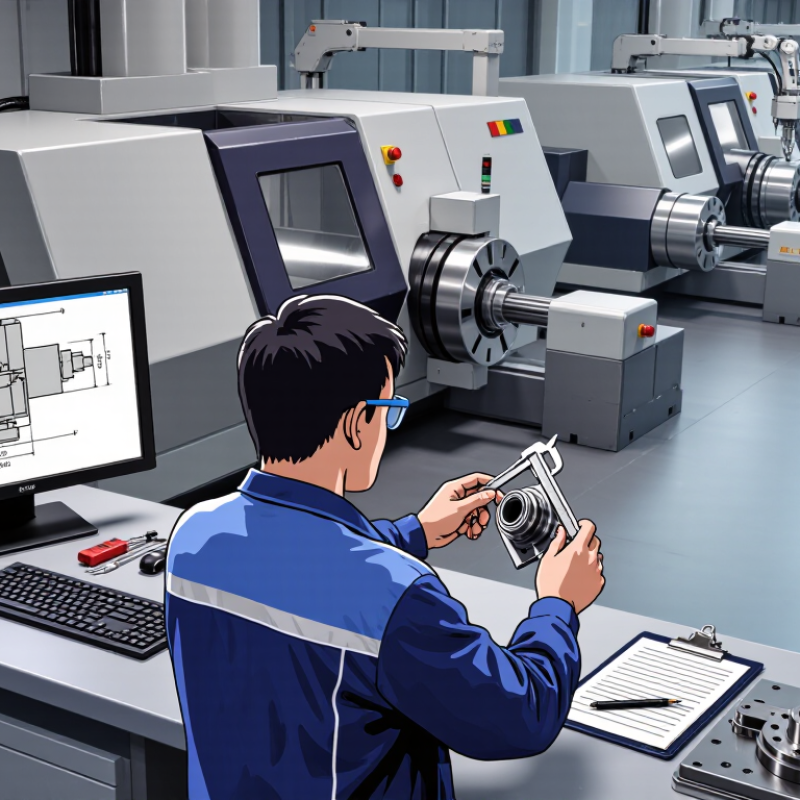
In 2026, a CNC turning service should cover more than machining a supplied drawing. It should begin with an engineering review of dimensions, tolerances, material, and production volume. Experienced machinists check whether a narrow groove, deep bore, or thin wall can be produced reliably. Details matter. They may suggest a small radius change to reduce tool wear and prevent distortion.

The service normally includes CAD/CAM preparation, CNC turning, deburring, cleaning, and surface finishing when requested. It may also include heat treatment, coating, thread inspection, and controlled packaging through qualified partners. Quality control should involve calibrated micrometers, gauges, and coordinate measurement equipment. Inspection reports should identify actual results, not simply confirm that parts “passed.” Material certificates and batch traceability add useful protection for future audits.

A reliable provider also explains lead times, setup charges, minimum quantities, and tolerance limitations before production begins. Ask for a sample inspection report and a clear response process for nonconforming parts. Communication is part of the service. In real production reviews, a technically capable supplier can still lose trust through vague updates or incomplete documentation. That weakness deserves attention. A practical quotation should identify the machine capacity, expected cycle time, finishing method, inspection scope, and packaging details. CNC turning is precise, but no process is flawless; thoughtful suppliers document risks and correct them instead of hiding them.

How to Choose the Best CNC Turning Service in 2026?

What a CNC turning service should include: use the applicable tolerance range as a baseline when reviewing drawings, quotations, inspection plans, and production capability.

The chart shows the general dimensional tolerance limits for nominal sizes commonly encountered in CNC-turned parts. These values follow ISO 2768-1, tolerance class m, and are shown in millimetres. A complete CNC turning service should also include drawing review, material verification, tooling and process planning, surface-finish control, first-article or in-process inspection, and a final inspection report. Confirm the required tolerance standard with your engineering and quality teams before production.

How to Define Your Part’s Turning Requirements

Choosing a CNC turning service starts with defining the part, not requesting a price. Record the material grade, finished diameter, overall length, thread form, surface finish, and critical tolerances. State the datum clearly. A vague drawing can create a precise mistake.

Separate functional dimensions from cosmetic ones. For example, a bearing seat may require ±0.01 mm, while an external diameter may accept ±0.05 mm. Include the raw bar size, expected monthly quantity, and required delivery window. The International Federation of Robotics reported more than 541,000 industrial robots were installed worldwide in 2023. This growth reflects stronger automation, but automation cannot repair unclear requirements. I have seen a beautifully formatted drawing fail because the inspection method was missing.

Tips: Ask the supplier to review manufacturability before quoting. Confirm whether tolerances are measured at room temperature. Specify thread gauges, surface roughness equipment, and inspection records when necessary. The 2024 World Robotics report also shows continued investment in automated production, yet small batches may still need flexible, operator-led setups. That difference matters. A low unit price can hide fixture costs, extra deburring, or repeated inspection. Do not assume every tolerance deserves maximum precision. It may increase cost without improving performance. Require a first-article sample when the part has tight fits, thin walls, or unusual materials. Then compare the sample against your real assembly, not only the drawing.

How to Compare CNC Turning Providers and Capabilities

Choosing a CNC turning service in 2026 requires more than checking hourly prices. Compare providers by machine capacity, material experience, and inspection discipline. Ask whether their lathes handle your diameter, length, tolerance, and production volume. A capable supplier should explain spindle speed, chuck limits, live tooling, and repeatability clearly. Request sample inspection reports, not polished promises. Look for calibrated gauges, documented revisions, and traceable material certificates. Experience matters here. A provider that solved similar thread, burr, or distortion problems can prevent expensive rework.

Compare quotations line by line. Confirm programming, tooling, setup, secondary operations, packaging, and freight. Cheap machining can become costly after revisions. Ask for a realistic first-article schedule and evidence of process control. During a technical call, describe one difficult feature and listen carefully. Strong engineers ask about datum structure, surface finish, and functional fit. They may suggest a drawing change, but they should explain the trade-off. I once trusted a fast quotation too quickly. The missing deburring requirement caused delays. That mistake still influences how I review proposals. No comparison is perfect.

Tips: Build a simple scorecard covering capability, quality, communication, lead time, and total cost. Give each category a clear weight. Request a small pilot batch when risk is high. Measure actual dimensions yourself if possible. Check how quickly the team reports nonconformities. Honest communication is a capability. Also, avoid judging a shop by one impressive machine. Maintenance records, operator skill, and backup capacity often matter more during urgent production.

How to Choose the Best CNC Turning Service in 2026? — How to Compare CNC Turning Providers and Capabilities
Evaluation Dimension Prototype & Low-Volume Specialist Precision Production Shop High-Volume Manufacturing Partner Integrated Contract Manufacturer
Best-Fit Project Type One-off parts, prototypes, engineering samples, and design validation. Repeated small-to-medium production runs requiring stable dimensional control. Large recurring orders with mature designs and predictable demand. Complex programs requiring machining, finishing, inspection, assembly, and logistics.
Typical Production Quantity 1–100 parts per order. 50–10,000 parts per order. 1,000–100,000+ parts per order. 100–50,000 parts per order, depending on process complexity.
Common CNC Turning Capacity Small to medium components, typically up to approximately 250 mm turning diameter. Small to medium components, typically up to approximately 500 mm turning diameter. Medium to large components, often above 500 mm turning diameter. Capacity varies by approved machine pool and project requirements.
Achievable General Tolerance Typically ±0.02–0.05 mmTighter tolerances may require additional inspection or secondary operations. Typically ±0.01–0.03 mmSuitable for many precision mechanical components. Typically ±0.02–0.05 mmOptimized for repeatability and process stability. Project-specificCapability should be confirmed through drawings, process studies, and inspection reports.
Surface Roughness Capability Commonly Ra 1.6–3.2 µm as machined; finer finishes may need secondary processing. Commonly Ra 0.8–3.2 µm as machined, depending on material and tooling. Commonly Ra 1.6–3.2 µm with emphasis on consistent batch results. Machining plus grinding, polishing, plating, anodizing, or other qualified finishing routes.
Material Coverage Aluminum, brass, copper, mild steel, stainless steel, engineering plastics, and selected titanium grades. Aluminum, steels, stainless steels, brass, copper alloys, plastics, and selected high-temperature alloys. Production-grade steels, stainless steels, aluminum alloys, brass, and other materials suited to automated runs. Broad material coverage subject to documented supplier qualification and traceability requirements.
Live Tooling & Milling Available on selected machinesUseful for basic cross-holes, flats, slots, and polygon features. Common capabilityY-axis and live-tool operations can reduce secondary setups. Available for production modelsBest suited to repeatable features and cycle-time optimization. Integrated capabilityMay combine turning, milling, grinding, and assembly under one program.
Automation Level Low to moderate; operator-led setup is common for flexible prototype work. Moderate to high; bar feeders, probing, tool monitoring, and pallet systems may be available. HighDesigned for unattended or lightly attended repeat production. Varies by process; automation may cover machining, inspection, material handling, and packaging.
Programming & DFM Support Fast feedback on manufacturability, tolerances, tooling, and prototype changes. Formal design-for-manufacturing review with process and fixture recommendations. Detailed cycle-time, tooling-life, and production-yield optimization. Cross-functional DFM covering machining, finishing, assembly, packaging, and supply planning.
Quality Management Basic inspection records and first-article checks; verify whether formal certification is required. Documented inspection plans, calibrated equipment, first-article inspection, and process records. Statistical process control, capability studies, sampling plans, and batch traceability are commonly used. Integrated quality system with supplier controls, nonconformance management, audits, and full documentation.
Inspection Equipment Calipers, micrometers, gauges, height gauges, and selected optical measurement tools. Coordinate measuring machine, optical comparator, surface tester, gauges, and calibrated hand tools. Automated gauging, in-process probing, CMM inspection, and production measurement systems. Combination of CMM, optical systems, roundness measurement, surface testing, and customer-specific equipment.
Material Traceability Available on requestConfirm heat-lot or batch certificates before ordering. Usually availableSuitable for controlled industrial and commercial applications. Standard for qualified programsUseful for repeat production and regulated supply chains. Highly structuredCan include material certificates, process history, and serialized records.
Prototype Lead Time Approximately 3–10 business daysDepends on material, tolerance, quantity, and finishing. Approximately 5–15 business days for standard materials and manageable tolerances. Usually slower for initial samples because process validation and tooling preparation are required. Approximately 10–30 business days when multiple manufacturing and finishing steps are included.
Production Lead-Time Advantage Fast for simple repeat orders, but capacity may be limited for large batches. Balanced lead time with good flexibility for changing production requirements. Strongest for recurring volumeDedicated tooling and automation can reduce unit cost and cycle time. Can reduce total program lead time by coordinating machining, finishing, inspection, and delivery.
Cost Profile Higher unit price but low setup commitment and low minimum order quantity. Balanced unit cost, quality, flexibility, and engineering support. Lowest potential unit cost at stable, high production volumes; initial tooling costs may be higher. Higher program-management cost may be offset by fewer suppliers and reduced coordination effort.
Finishing Options Deburring, bead blasting, polishing, anodizing, plating, heat treatment, and painting through qualified partners. Commonly manages deburring, heat treatment, plating, anodizing, passivation, and surface finishing. Finishing is typically standardized for repeat production and controlled through approved process routes. Broadest service scope, potentially including finishing, marking, assembly, packaging, and kitting.
Recommended For Design teams that prioritize speed, flexibility, and low-volume experimentation. OEMs seeking a reliable balance between precision, responsiveness, and repeat production. Procurement teams focused on unit cost, capacity assurance, and long-term supply agreements. Companies seeking a single accountable partner for a multi-stage manufacturing program.
Key Questions to Ask Before Ordering Can you hold the drawing tolerances? What is the fastest sample schedule? Which inspection documents are included? What process capability data, inspection plan, and corrective-action process are available? What monthly capacity, backup equipment, tooling strategy, and supply-continuity plan can be demonstrated? Which operations are performed in-house, how are subcontractors controlled, and how is end-to-end traceability maintained?

How to Evaluate Quality, Materials, Costs, and Lead Times

How to Choose the Best CNC Turning Service in 2026?

Quality should be measured through evidence, not polished promises. Ask for inspection reports, material certificates, and process capability data. A reliable supplier should explain its tolerances clearly. ISO’s Survey of Certifications reports more than one million ISO 9001 certificates worldwide, but certification alone proves little. Review calibration records, first-article inspection methods, and sample parts under magnification. Check burrs, thread accuracy, surface finish, and dimensional consistency. Small defects often reveal weak process control.

Material selection affects strength, machinability, cost, and delivery risk. Confirm the exact alloy grade, hardness range, and heat-treatment condition. The 2024 World Materials Forum report highlights continuing pressure on critical-material supply chains. Therefore, request approved alternatives before production begins. Aluminum may reduce machining time, while hardened steel can increase tool wear and inspection needs. A cheaper material is not always cheaper overall. I have seen “equivalent” substitutions create avoidable rework.

Compare quotations by total value, not unit price alone. Include tooling, programming, finishing, packaging, inspection, and shipping. The Manufacturing Institute’s 2024 workforce report identifies persistent skilled-labor shortages, which can extend lead times. Ask for a realistic production schedule with milestone dates. Separate prototype timing from repeat-order timing. Obtain written tolerance assumptions. That step is often missed. A supplier promising five days without discussing batch size, material availability, or inspection scope deserves careful questioning. Allow contingency time; perfect schedules rarely survive real production.

How to Select the Best Service for Long-Term Production Needs

Selecting the best CNC turning service for long-term production requires more than comparing hourly rates. Review its experience with similar materials, tolerances, part sizes, and annual volumes. Ask for inspection records, process capability data, and sample parts from recent work. A reliable supplier should explain how it controls tool wear, heat distortion, and dimensional drift during extended runs. Clear answers matter.

Production stability depends on communication. Confirm lead times for prototypes, repeat orders, engineering changes, and emergency replacements. Check whether the service uses documented work instructions and maintains calibrated measuring equipment. Traceable material certificates can prevent costly disputes later. I also recommend discussing packaging, labeling, and shipment checks before approving the first batch.

Look beyond the first quotation. A low price may hide setup delays, inconsistent finishes, or weak corrective action. Request a small pilot order with difficult features included. Measure roundness, thread quality, surface finish, and delivery accuracy. Then review the supplier’s response to defects. This often reveals more than a polished sales presentation.

No supplier is flawless. I once focused too heavily on machine capacity and overlooked response speed. That mistake affected scheduling. Long-term partnerships need technical skill, honest reporting, and practical problem-solving. Define performance targets in writing, but leave room for regular review as designs and demand change. A service that documents lessons learned can become more valuable than one offering the cheapest initial quote.