











How to Improve Heart Rate Variability?
Heart Rate Variability (HRV) describes the variation in time between consecutive heartbeats. It is influenced by the body’s changing demands, including sleep, stress, illness, and physical activity. HRV is not a score of overall health, and one reading cannot diagnose a condition. Context matters.
Wearable devices can make HRV easier to track, but their measurements may differ by device and timing. A low reading after a restless night, a hard workout, or a stressful day may be temporary. Look for patterns over time, ideally using the same device and consistent measurement conditions. Numbers can be noisy.
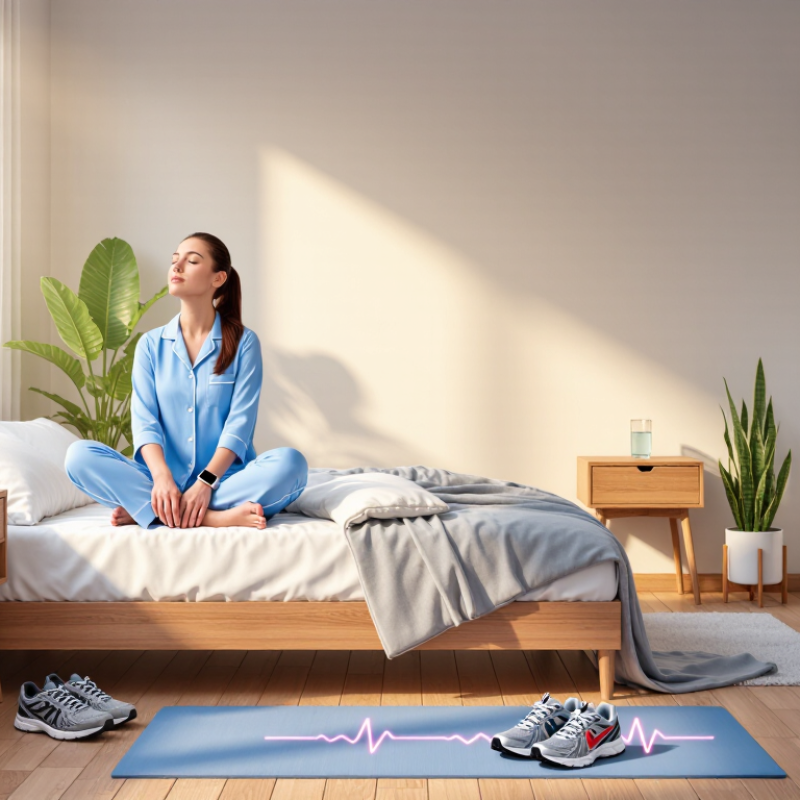
Improving HRV usually means supporting the habits that help the body recover, rather than chasing a perfect number. Consistent sleep, regular moderate movement, gradual training, and simple relaxation practices may help. For example, a calm breathing pause after work can be more realistic than a demanding routine you cannot sustain. Small steps count.
This guide explores practical ways to build those habits and explains what HRV can—and cannot—tell you. Results vary, and progress may be uneven. That is worth remembering. HRV should not replace medical advice, especially when symptoms such as chest pain, fainting, or persistent palpitations occur. A clinician can interpret readings alongside your health history and other signs.
Understanding Heart Rate Variability and How It Is Measured
Heart rate variability (HRV) describes changes in the time between consecutive heartbeats. A healthy heart does not beat like a metronome. Its timing shifts as the nervous system responds to breathing, sleep, activity, stress, and illness. HRV is usually measured in milliseconds, using intervals between heartbeats rather than average heart rate. One common measure is RMSSD, which reflects short-term changes in those intervals. Higher values are not automatically better for everyone. Age, health, and personal patterns all matter.
HRV can be estimated from an electrocardiogram or a wearable sensor that detects pulse waves. These methods do not always agree, and movement can distort readings. For a more useful comparison, measure under similar conditions, such as after waking, while resting and before exercise. Look at trends across days or weeks, not a single morning’s number. Context matters more. A late night, a hard workout, or even a restless moment can shift the result. I find that easy to forget when a device presents one neat score. HRV is not a diagnosis, and a change alone cannot explain what is happening in your body.
