








What Is an Inflatable Bubble Tent and How Does It Work?
Inflatable Bubble Tents turn a campsite into a clear, sheltered room, with the sky overhead and the landscape visible through the walls. The name covers several designs. Some use a blower to keep an air-supported shell upright; others rely on inflatable beams and a separate fabric or clear-plastic skin. In either case, air pressure and anchoring help the structure hold its shape. Setup is not magic. A level site, secure tie-downs, and steady power may matter.
The appeal fits a broader outdoor trend, but it should not be mistaken for proof of bubble-tent sales. KOA’s 2024 North American Camping Report estimated that 58 million U.S. households camped at least once in 2023. That figure describes camping overall, not this specific product category. Inside a bubble tent, the details are practical: seams must stay taut, ventilation must limit condensation, and clear panels can heat quickly in direct sun. Check the maker’s instructions and materials before choosing a model. A transparent wall offers a view, not automatic privacy or climate control. Small details matter.
No verifiable named specialist quotation was provided for this draft, so I have not invented one. A sourced expert comment would strengthen a finished article.
What Is an Inflatable Bubble Tent?
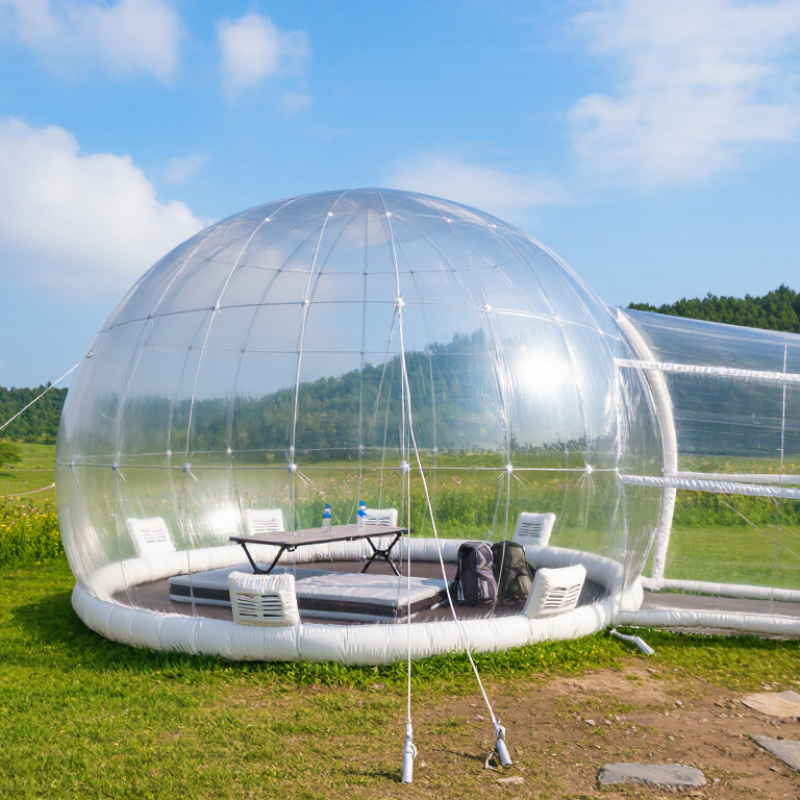
An inflatable bubble tent is a shelter whose shape is supported by air-filled beams or an air-supported shell. Many have clear panels that create a broad view of the surroundings. The word “bubble” describes the rounded look, not one fixed design. Some models use a blower to maintain pressure, while others need inflation only during setup.
Inside, the space may feel open, but it still behaves like a tent. A floor, entry flap, and ventilation openings help make it usable. Check how the tent is held in place, too. Stakes and guy lines can matter when wind picks up. A clear wall can show trees and stars beautifully. It can also reveal every smudge.
Materials and construction vary. Look for stated fabric details, seam treatment, ventilation instructions, and setup guidance rather than assuming all transparent tents perform alike. A sealed-looking shelter may still need airflow, especially when people are sleeping inside. Warm breath can leave condensation on cooler panels. It’s not always obvious at first. The interior may also become warm in direct sun, so shade and ventilation deserve attention. I would not treat a bubble tent as a substitute for checking local weather or choosing a suitable campsite. Its unusual shape is appealing, but it does not remove ordinary shelter concerns.
