












What Is a Personal Care Appliance Accessories Factory?
A personal care appliance accessories factory designs and produces the replaceable or supporting parts used with grooming and beauty devices. Its products may include hair-clipper guards, shaver heads, brush attachments, filters, cords, and charging stands. The exact range varies by supplier. The term can sound broader than it is.
In practice, a personal care appliance accessories factory in the field may handle product development, material selection, tooling, molding, assembly, and inspection. A small attachment still needs careful checks. Its connector must fit the appliance, its edges should feel smooth, and its materials should remain consistent from batch to batch. Packaging and clear product identification matter, too. A part that looks right may still fit poorly.
Dieter Rams, a respected consumer-product designer, offered a useful principle: “Good design is as little design as possible.” Applied to accessories, that means avoiding needless complexity while making parts practical, durable, and easy to use. But a factory’s real capabilities cannot be judged from a polished sample alone. Buyers should ask how fit, finish, and consistency are checked across production. That takes more effort. It is worth it. Even a straightforward accessory can reveal gaps between design intent and everyday use. Those gaps deserve honest review, not a quick claim of quality.
What a Personal Care Appliance Accessories Factory Is
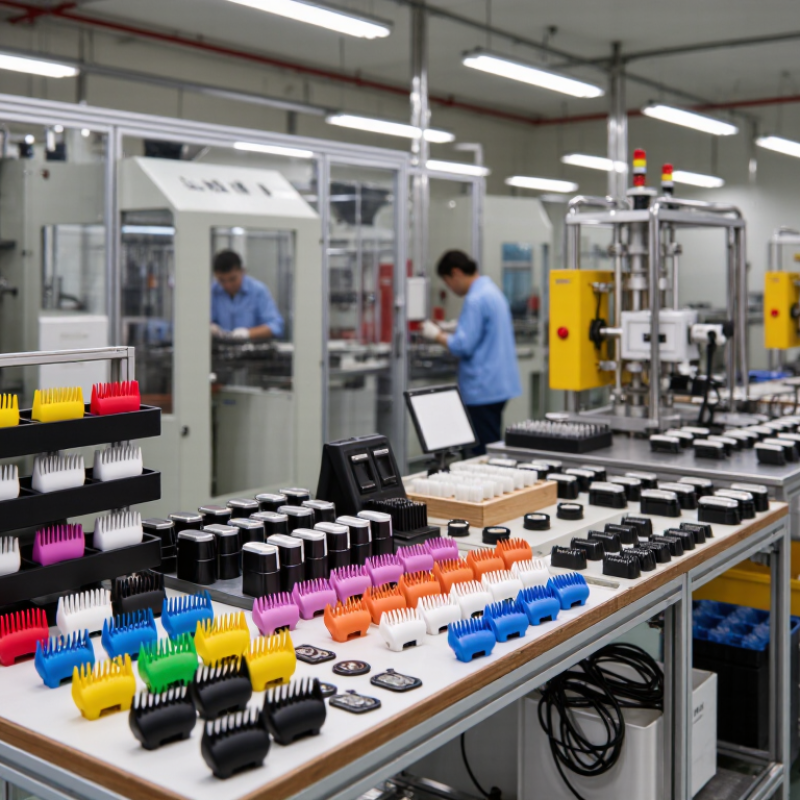
A personal care appliance accessories factory makes the removable or supporting parts used with grooming devices. Typical products include clipper guards, hair-dryer concentrator nozzles, replacement filters, comb attachments, charging stands, and travel cases. The factory may turn a product drawing into a mold, select plastics or metals, and manage molding, assembly, and inspection. Fit matters. A guard that slips or a nozzle that blocks airflow can make an otherwise well-built appliance frustrating to use. Checks may include dimensional measurement, attachment and removal cycles, heat exposure, and visual inspection. Production details vary by product, so one test plan cannot cover every accessory.
Tips: Ask suppliers for material specifications, sample-fit records, and inspection criteria. Keep a “golden sample” for comparison—but review it when designs change.
The Global E-waste Monitor 2024, published by UNITAR and the ITU, estimates that the world generated 62 million tonnes of e-waste in 2022; 22.3% was formally collected and recycled. This figure covers all e-waste, not personal-care accessories specifically. Still, it makes durability and replaceable parts worth considering during product planning. A factory can help by tracking material batches and checking whether frequently replaced pieces can be supplied separately. These steps do not guarantee a longer product life. Poor fit, unclear drawings, or rushed tooling can still lead to waste; those weak points deserve review.
