


















Why Is Skin Brightening Raw Material in High Demand?
Why Is Skin Brightening Raw Material in High Demand? The question reflects a visible shift in skincare: consumers increasingly seek products that address dullness and uneven-looking tone. A Skin Brightening Raw Material may be selected to support a more even-looking complexion. Results depend on the ingredient, formula, and consistent use. Interest also comes from expanding skincare ranges, online product discovery, and demand for targeted routines. That matters.
For formulators and ingredient buyers, demand is not only about a popular claim. They must assess identity, purity, traceability, stability, and compatibility with the finished product. A promising ingredient may behave differently in a water-based serum than in a cream. Small details count: discoloration in a clear bottle, an unexpected scent, or separation during storage can affect product quality. Evidence matters. Reliable decisions draw on relevant research, supplier records, and product-specific testing, rather than broad promises.
Manufacturers may also value consistent batches and clear technical documents when scaling formulas across product lines. Still, consistency cannot replace testing. No single ingredient suits every skin type or formulation, and visible outcomes can vary. That is easy to overlook. A useful look at this market should examine consumer demand alongside formulation quality, substantiated claims, and responsible sourcing. Interest is growing, but careful questions remain—and that tension makes the category worth exploring.
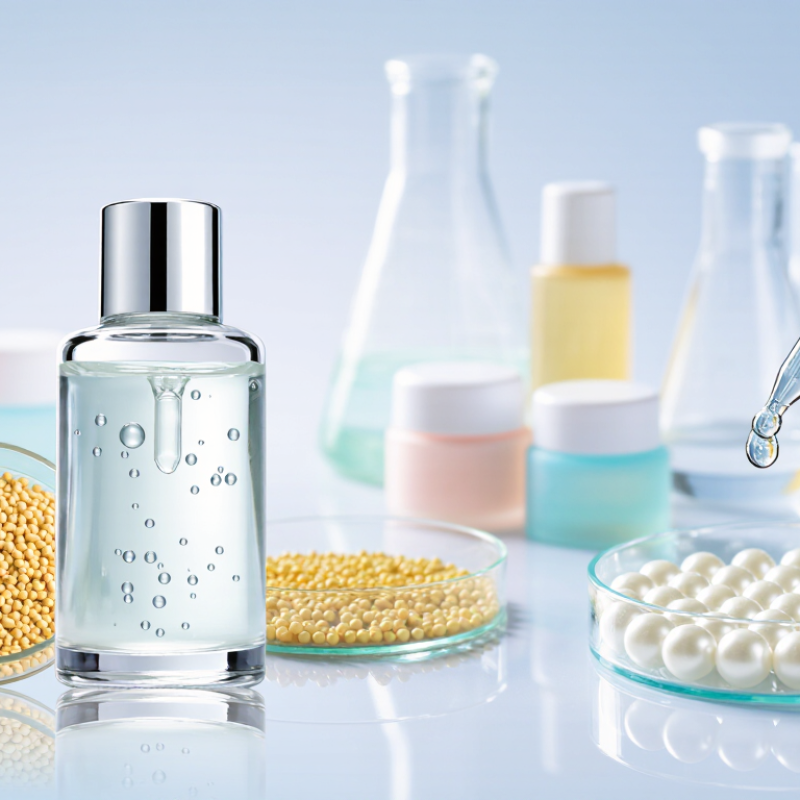
What Skin-Brightening Raw Materials Are and How They Work
Skin-brightening raw materials are ingredients used to reduce the appearance of uneven tone, not to change a person’s natural skin color. They work through different routes. Some slow tyrosinase, an enzyme involved in melanin production; others limit pigment transfer to surface skin cells or support gradual cell renewal. Vitamin C derivatives can also help limit oxidation that makes existing pigment look darker.
Niacinamide illustrates the difference: research found it can reduce melanosome transfer, rather than directly stopping melanin production (Hakozaki et al., British Journal of Dermatology, 2002). Tyrosinase-targeting ingredients, such as arbutin, act earlier in the pigment pathway. Results are gradual. Not all work alike. A market analysis by Grand View Research estimated the global skin-lightening products market at USD 9.96 billion in 2023, reflecting broad commercial interest, though market size does not prove ingredient effectiveness.
In practice, formulation matters as much as the ingredient name. A poorly tolerated acid may cause irritation, and irritation can leave discoloration more noticeable, especially in deeper skin tones. Sunscreen helps prevent ultraviolet exposure from reinforcing pigmentation. That detail is easy to overlook. Even evidence-backed ingredients vary in strength, stability, and performance across formulas, so claims should be judged against clinical studies and the finished product—not a raw-material label alone.
