












7 Tips for Choosing a Toothbrush Mold Supplier?
Choosing a toothbrush mold supplier is not just a price comparison. The tool shapes the bristle field, handle fit, surface finish, and consistency of every production run. A small mismatch at the neck can cause assembly trouble. A rough cavity may leave visible marks on a glossy handle. Details matter.
John Bozzelli, an injection-molding educator, has emphasized scientific molding and repeatable process control. In paraphrase, his guidance offers buyers a useful principle: a good mold must support a stable, repeatable process. That is not a direct quotation. Ask suppliers how they control dimensions, manage cooling, and inspect mold components—not only how quickly they can deliver. Request evidence, such as inspection records, sample parts, and a clear maintenance plan. Look closely at parting lines and narrow cavities. A polished sample can still mislead if it came from a short trial. It happens.
These seven tips will help you assess design capability, material choices, communication, lead time, after-sales support, and total cost. They also encourage a candid question: does the supplier understand toothbrush production, or only mold making? No checklist removes every risk. But careful questions can reveal gaps before steel is cut, when changes are easier and less costly.
Understand Your Toothbrush Mold Requirements
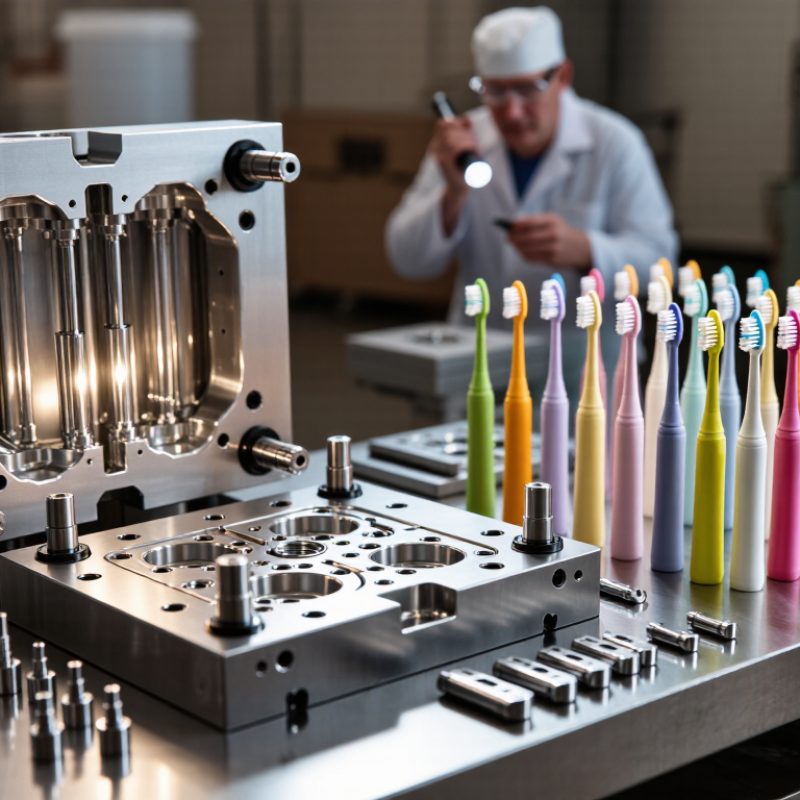
Before comparing toothbrush mold suppliers, define the product and production requirements clearly. Record the brush-head dimensions, handle shape, neck angle, and bristle-hole spacing. A small change in hole position can affect tufting and finished-brush consistency. Note the intended plastic resin, expected output volume, and number of cavities. These details influence mold layout, cooling, and cycle time. Small details matter.
Ask how the mold will handle the product’s tightest features. For example, a narrow neck may need careful attention to steel strength and ejection. Share 2D drawings and, when available, a 3D model with tolerances marked. Also discuss surface finish, parting lines, and how the supplier checks sample parts. A useful review includes actual measurements, not only a visual inspection. Keep room for revision. Early samples may reveal that a comfortable grip or clean part release needs a small design change. That is normal, though changes can affect timing and cost. Clarify who approves those changes and what evidence is provided before production begins. Start with samples.
