












Why Choose a Titanium Dinner Plate for Outdoor Dining?
A Titanium Dinner Plate can make outdoor meals feel simpler, especially when every item must earn space in a pack. It is light to carry, yet sturdy enough for repeated trips, from a damp campsite to a rocky picnic table. Rinse off breakfast oats, wipe away a little sauce, and it is ready for the next meal. Small details matter outdoors.
Titanium also resists rust, but it is not magic. The plate can become hot in direct sun, and thin designs may flex under pressure. Its smooth surface may slide on uneven ground, too. These trade-offs deserve attention, not glossy promises. Check the plate’s weight, diameter, rim shape, and care instructions before choosing one. A raised rim can help keep rice or trail mix from spilling when the table shifts.
The right plate depends on how you travel. A solo hiker may value low weight, while a family camper may want a wider surface for shared meals. A titanium dinner plate can last for years with sensible care, though its purchase cost may exceed that of basic alternatives. I can’t responsibly assign a quotation to a named industry expert without a verifiable source. Provide a sourced expert statement, and it can be incorporated accurately.
What Is a Titanium Dinner Plate?
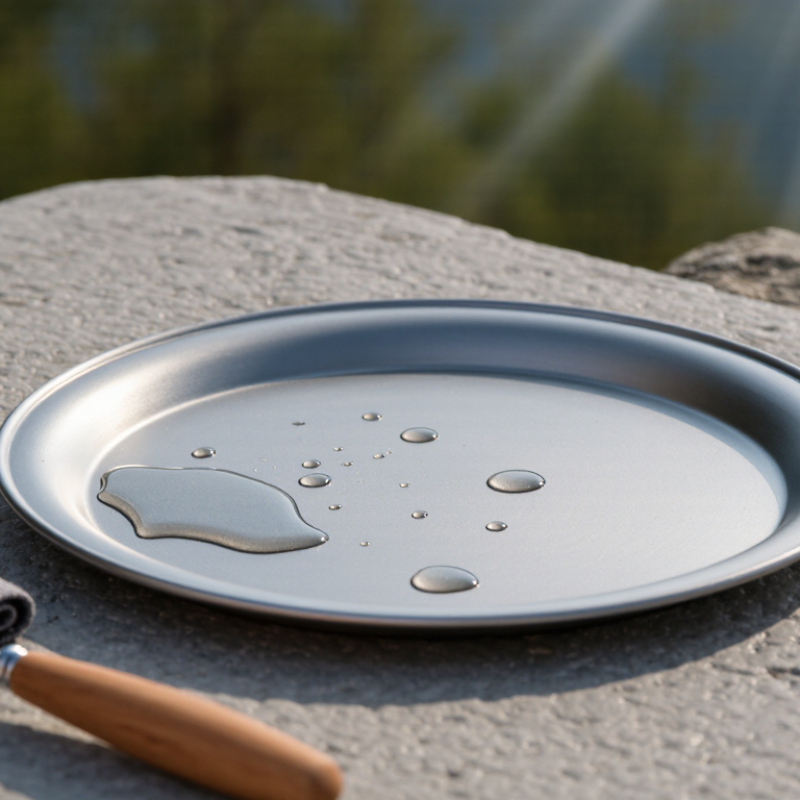
A titanium dinner plate is a shallow eating vessel made from titanium metal, not simply a steel plate with a titanium-colored finish. Manufacturers may use commercially pure titanium or a titanium alloy, then shape and finish the sheet into a plate. The exact grade and thickness matter. Two plates can look similar but feel quite different in the hand.
Titanium is valued for its relatively low density and resistance to corrosion. The U.S. Geological Survey’s Mineral Commodity Summaries 2025 estimates that China produced about 220,000 metric tons of titanium sponge in 2024, illustrating the scale of the material’s industrial supply. That figure describes raw-material production, not dinnerware quality. For outdoor dining, a plate’s weight, rim shape, surface finish, and stiffness are more useful details to check. A thin plate may flex under a heavy meal. Not ideal.
Unlike a disposable paper plate, titanium dinnerware is intended for repeated use and can be rinsed after a meal outdoors. Its smooth surface can make cleaning straightforward, though food may still cling if the finish is rough or scratched. Titanium does not automatically make every plate indestructible. Check for rolled or rounded edges, since sharp rims feel unpleasant when washing or packing. Small details matter. A plate that nests neatly with others may be more practical around a crowded camp table.
