














Top 10 3D Skin Scanners for Global Buyers?
Choosing a 3D Skin Scanner for a clinic, salon, or distribution business involves more than comparing product photos. Global buyers need to assess image quality, measurement consistency, software usability, and local service support. A device may look impressive in a showroom but prove difficult to calibrate under different lighting conditions.
Practical details matter. Can the scanner capture clear facial images without lengthy setup? Does its software present results in a way staff and clients can understand? Buyers should also review training, warranty terms, data-handling practices, and compatibility with existing systems. Requirements can differ by market, so confirm applicable product documentation and support before placing an order.
Numbers matter. But they do not tell the whole story. This guide introduces ten options for consideration, using features and buyer-relevant criteria rather than assuming one model suits every business. Product specifications and availability can change, and published performance claims deserve careful verification. A scanner’s results may also vary with user technique, lighting, and skin condition. That is easy to overlook. The comparisons should therefore be treated as a starting point, not a substitute for a demonstration, reference checks, or a needs assessment. A careful shortlist can help buyers ask better questions and choose equipment that fits their workflow, budget, and customers.
What 3D Skin Scanners Measure and How They Work
Top 10 3D Skin Scanners for Global Buyers?
What 3D Skin Scanners Measure and How They Work
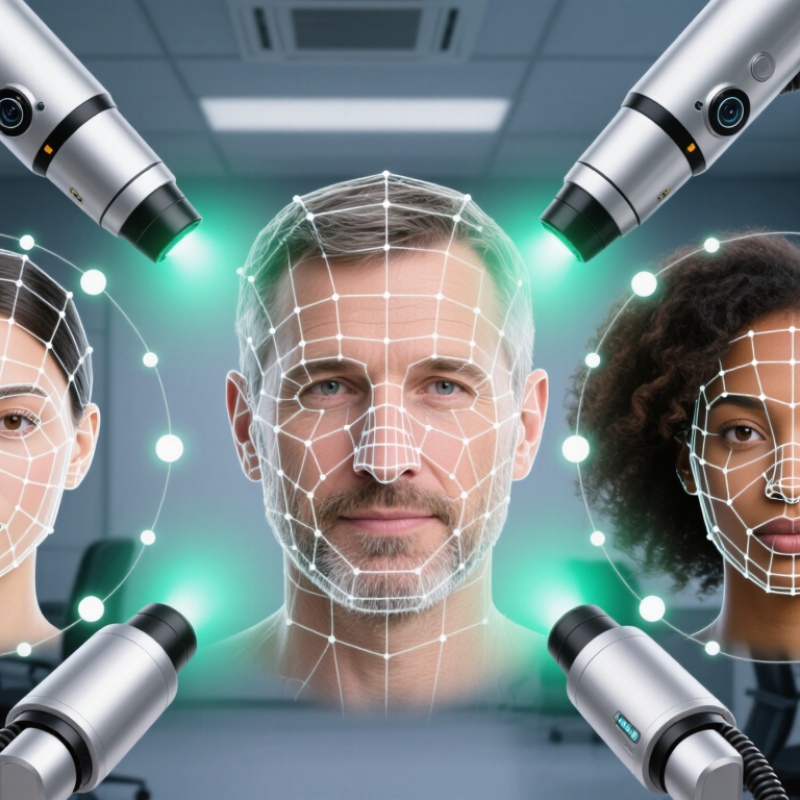
A 3D skin scanner combines cameras with structured light or stereo imaging to map the skin’s surface. It can estimate wrinkle depth, pore size, roughness, and facial volume. Some systems add polarized or ultraviolet lighting to highlight visible redness, pigmentation, or surface oil. These are imaging measurements, not diagnoses. Results depend on camera distance, lighting, facial expression, and even a fresh layer of moisturizer. Small details matter.
For surface data, ISO 25178-2:2021 defines parameters such as Sa, average surface height, and Sz, maximum height across an area. These terms help buyers compare what devices actually quantify, rather than relying on vague claims like “skin age.” A scanner may report changes over time, but its numbers are most useful when the same person is scanned under consistent conditions. One scan can mislead.
A useful evaluation checks the raw image, measurement units, and software limitations. Darker and lighter skin tones can appear differently under some lighting methods, so request validation across varied skin types. Also check whether the device measures surface texture alone or combines it with color imaging. That distinction affects what the results can reliably tell you.
