

















China Top 10 Powder Apple Cider Vinegar Suppliers?
Powder Apple Cider Vinegar is moving from niche ingredient to a practical format for supplement and food manufacturers. It blends easily into sachets, capsules, drink mixes, and seasoning powders. Yet “powder” does not mean every product is made the same way. Carrier ingredients, acidity, moisture control, and testing can differ sharply between suppliers.
The wider category is growing. Grand View Research estimated the global apple cider vinegar market at USD 1.01 billion in 2023 and projected a 7.7% compound annual growth rate from 2024 to 2030. This figure covers apple cider vinegar broadly, not powder alone. That distinction matters. Public market reports rarely separate powdered vinegar from liquid products, so supplier comparisons need careful reading.
Researcher Carol Johnston and Cindy Gaas wrote, “Vinegar has been used as a condiment and preservative for thousands of years,” in their review “Vinegar: Medicinal Uses and Antiglycemic Effect” (2006). Their work concerns vinegar generally, not a guarantee about powdered products. A useful reminder.
This guide examines ten suppliers through practical signals: ingredient specifications, production capabilities, quality documentation, and export experience. Buyers should request a current certificate of analysis and confirm the powder’s carrier and acidity details. A polished website is not proof of consistent batches. And rankings have limits. Supplier information changes, while public records may not reveal every manufacturing detail.
Powdered Apple Cider Vinegar: Ingredients, Carriers, and Production Methods
Powdered Apple Cider Vinegar: Ingredients, Carriers, and Production Methods
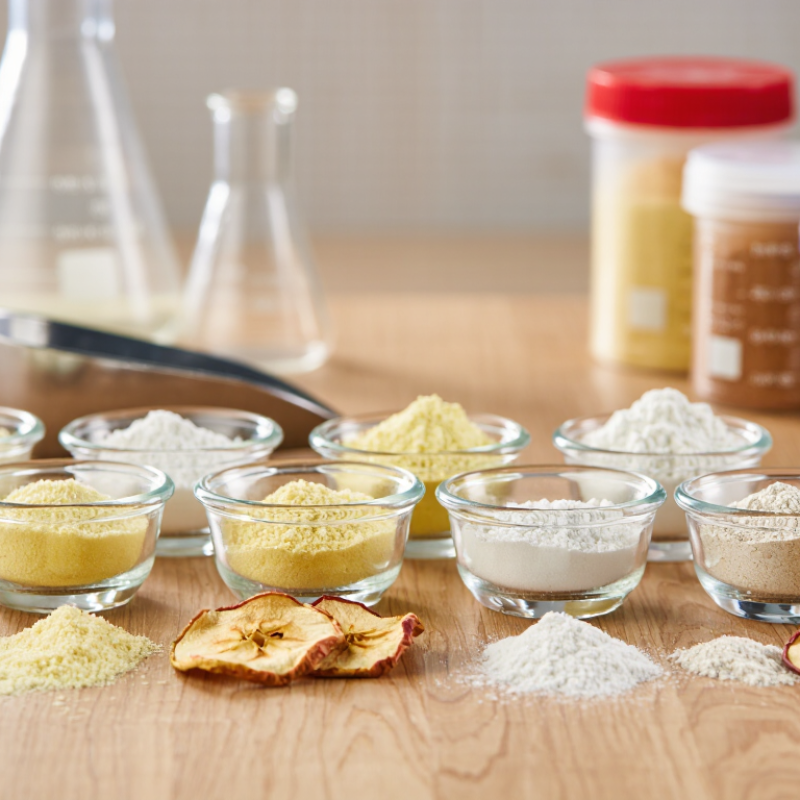
Powdered apple cider vinegar is made by drying liquid vinegar into a more manageable form. The ingredient list may include vinegar solids, a carrier, and sometimes an acidity regulator. Maltodextrin and tapioca-based ingredients are common carriers. They help absorb moisture and support a free-flowing powder, but they also affect the final product’s composition. Read the label carefully. “Apple cider vinegar powder” does not always mean the powder is pure vinegar solids.
Manufacturers may use spray drying, where a fine mist meets hot air, or freeze drying, which removes water at lower temperatures. Each method can influence aroma, color, solubility, and processing cost. A pale powder that disperses quickly may suit drink mixes, while other applications may tolerate a stronger vinegar aroma. These are useful clues, not proof of quality. For supplier evaluation, request specifications for acidity, moisture, carrier content, and batch consistency. Ask how results are tested.
Tips: Mix a small sample into water and check for clumping, sediment, and aroma. Compare the declared vinegar content with the carrier ingredients. Storage matters, too: humidity can turn a free-flowing powder into stubborn lumps. Packaging details deserve attention. They are easy to overlook.
