

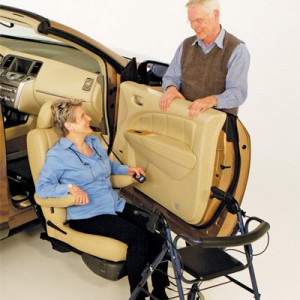
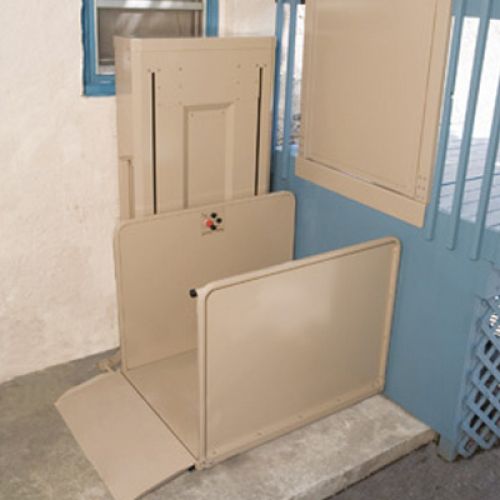
Choosing reliable China Top Mobility Van Manufacturers for Global Buyers requires more than comparing prices and glossy brochures. A capable supplier should understand accessibility, passenger safety, vehicle durability, and export preparation. This matters when a wheelchair ramp must open smoothly in rain, or when a lift supports daily use without excessive vibration. Buyers should examine factory experience, engineering qualifications, production capacity, and quality-control records. They should also request clear specifications for chassis, seating layouts, ramp dimensions, battery systems, and interior materials. A professional manufacturer will explain these details without hiding limitations.
Real reliability appears after delivery. Ask about inspection procedures, spare-parts availability, technician training, warranty response, and shipping support. A trustworthy supplier can provide test reports, product photographs, reference projects, and realistic delivery schedules. Country-specific certification requirements must also be checked independently. One vehicle may suit a city shuttle, but perform poorly on steep rural roads. That difference is easy to miss.
No supplier is perfect. Even experienced manufacturers may face delays, design changes, or communication gaps. This is where careful due diligence matters. Speak with previous customers when possible. Compare sample vehicles, not promises. Review contracts with qualified professionals. The strongest Mobility Van manufacturers usually welcome technical questions and document their answers. They do not rely only on low quotations. This guide examines leading Chinese manufacturers through practical criteria, including customization, manufacturing consistency, export experience, service capability, and long-term operating value. Some conclusions may change as models evolve, so buyers should verify current data before making a final decision.
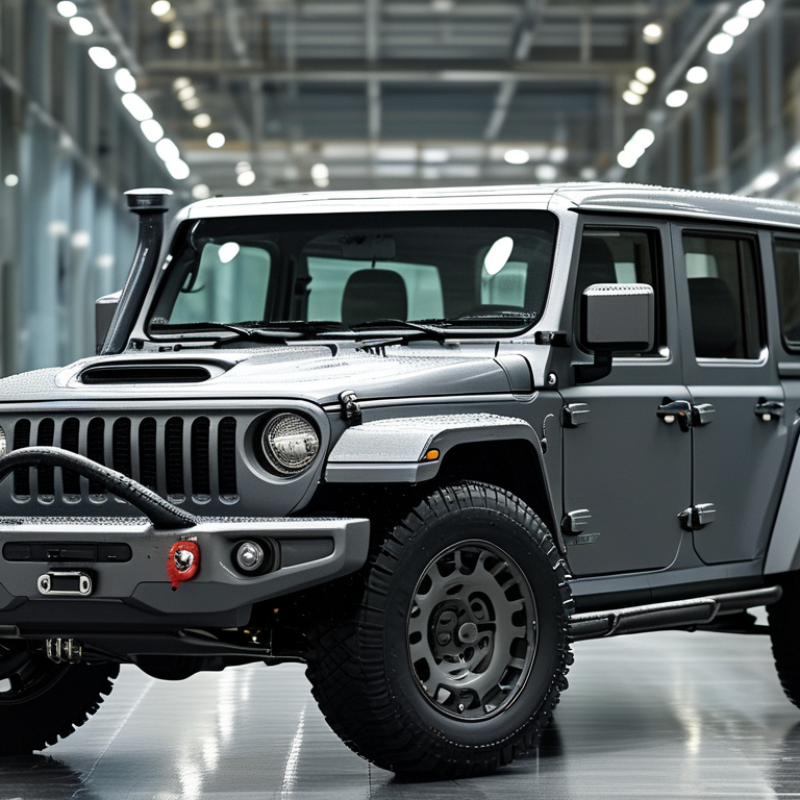
China’s van industry reached a major scale in 2023. CAAM reported 4.03 million commercial vehicle sales nationwide. This figure offers a strong market snapshot for global van buyers. It includes more than passenger vans, so it should not be read as a pure van total. Still, the number shows deep manufacturing capacity and broad domestic demand.
Chinese manufacturers now offer compact cargo vans, passenger carriers, electric models, and customized fleet vehicles. Buyers can often request changes to seating, storage, insulation, or loading access. In practical sourcing work, factory audits matter more than attractive catalog photos. Check welding quality, battery documentation, corrosion protection, payload testing, and spare-parts availability. A low purchase price can become expensive when service support is weak. This is easy to underestimate.
Tips: Compare at least three factories. Request recent inspection records. Verify real payload figures. Test doors, brakes, and cabin noise in person. Ask how quickly common parts can be supplied. Local road conditions also matter. A van designed for dense urban routes may struggle on rough regional roads. Specifications can look complete, yet small omissions still appear. That deserves careful review.
Five Chinese van manufacturers show different strengths rather than one universal formula. The electric-first specialist targets urban delivery with compact bodies, connected fleet tools, and multiple battery sizes. Its strongest advantage is usually city efficiency, not long-haul flexibility.
The commercial-vehicle veteran focuses on durable chassis, higher payloads, and serviceable mechanical layouts. That matters on rough roads. However, buyers should examine parts access outside China.
The broad-line exporter offers diesel, hybrid, and electric vans, helping fleets manage uneven charging infrastructure. Its product range can simplify procurement, although specifications may vary by market.
The passenger-vehicle giant adapts minivan platforms for shuttle services, school transport, and small businesses. Cabin comfort is a clear benefit. Payload limits need careful checking.
The battery-integrated manufacturer combines electric drivetrains, in-house battery technology, and strong software integration. The IEA’s Global EV Outlook 2024 reported nearly 14 million electric car sales in 2023, with China representing more than 60 percent.
That momentum supports electric van development, but passenger-car data cannot fully predict commercial-van performance. Industry forecasts from Interact Analysis also show rapid electric light-commercial-vehicle growth, though charging downtime remains a practical concern.
Buyers should compare battery warranty terms, real-world payload range, local certification, and technician training. Numbers on brochures can look impressive. Fleet trials often reveal the truth.
When comparing Chinese mobility-van converters, global buyers should examine safety evidence before styling or price. A low floor and wide door are only starting points. ISO 10542 provides a practical benchmark for wheelchair tiedown and occupant-restraint systems. It covers restraint strength, attachment points, installation, and dynamic performance. During an experienced inspection, I look for test records, restraint labels, and repeatable fitting instructions. A clean cabin proves little.
UNECE R107 adds a vehicle-level framework for applicable M2 and M3 buses. Its requirements may address wheelchair spaces, access equipment, gangways, priority areas, and emergency arrangements. A van-based vehicle may not fall under every R107 provision. Vehicle classification must be confirmed first. Buyers should also verify the approval route and national requirements before comparing quotations. This step is often missed. It can cause costly redesigns.
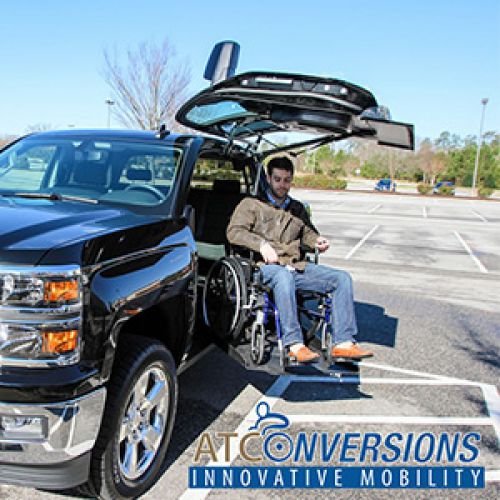
Inspect the ramp angle with a loaded wheelchair, not an empty demonstration chair. Check whether the belt crosses the shoulder without touching the neck. Measure clearance beside the occupied space. Examine corrosion protection around drilled anchorages. Test the lift after repeated cycles. Documentation should show the test configuration, anchorage layout, restraint details, and revision date. Still, paperwork can hide a weak conversion. Independent inspection and witnessed testing provide stronger confidence. My own benchmark should include operator feedback, too. Laboratory compliance cannot reveal every daily difficulty. That gap deserves attention.
| Benchmark Dimension | Reference Framework | Practical Requirement or Benchmark | Buyer Verification Evidence | Applicability / Status |
|---|---|---|---|---|
| Vehicle Classification | UNECE R107; national type-approval rules | Confirm whether the converted vehicle is classified as M1, M2 or M3. UNECE R107 primarily covers M2 and M3 passenger vehicles, while M1 vehicles may be regulated under different national or regional requirements. | Vehicle type-approval certificate, conformity documentation and registration-category confirmation. | Mandatory classification check |
| Wheelchair and Occupant Restraint System | ISO 10542-1 and ISO 10542-2 | Provide an integrated wheelchair tie-down and occupant restraint system designed for the wheelchair user and the wheelchair. Four-point strap-type systems are commonly used for forward-facing travel. | Test report identifying the complete WTORS configuration, installation instructions and approved operating limits. | Core safety benchmark |
| Dynamic Restraint Performance | ISO 10542 | The complete restraint system should be dynamically tested as a system, including wheelchair interface, occupant restraint, anchorage hardware and vehicle-floor installation. Component-only testing is not sufficient to demonstrate the performance of the installed conversion. | Independent laboratory report, test configuration, occupant surrogate details and pass/fail results. | Required for credible validation |
| Wheelchair Tie-Down Anchorages | ISO 10542; applicable vehicle-structure rules | Anchorages should be securely attached to reinforced vehicle structure and positioned to maintain the intended restraint geometry. The system should prevent unacceptable forward, rearward and lateral movement during a crash event. | Engineering drawings, anchorage load calculations, installation photographs and test documentation. | Safety-critical |
| Occupant Restraint Routing | ISO 10542 | The occupant restraint should be compatible with the wheelchair position and should route across the pelvis and shoulder without relying on removable armrests, wheels or other non-load-bearing wheelchair parts. | Installation manual, restraint-routing diagram and compatibility list for the intended wheelchair types. | Safety-critical |
| Forward-Facing Travel Position | ISO 10542; UNECE R107 accessibility provisions where applicable | For a forward-facing wheelchair position, provide sufficient clearance for the wheelchair, occupant restraint, tie-down operation and emergency release. The travel position should be clearly marked and protected from interference by seats or interior equipment. | Interior layout drawing, floor-track plan, clearance measurements and user instructions. | Recommended global benchmark |
| Wheelchair Space and Maneuvering Area | UNECE R107, applicable vehicle class and approval category | Where R107 applies, wheelchair spaces, access routes and maneuvering areas should comply with the dimensions and accessibility conditions specified for the relevant vehicle class. The final dimensions depend on vehicle category and approval configuration. | Dimensioned floor plan, accessibility inspection record and type-approval documentation. | Class-dependent requirement |
| Ramp or Lift Access | UNECE R107; relevant lifting-platform and machinery safety rules | Ramps and lifts should have adequate load capacity, slip resistance, edge protection, retention features and safe deployment controls. The access method should be compatible with the vehicle’s door opening and wheelchair dimensions. | Rated load certificate, deployment test record, maintenance instructions and emergency-operation procedure. | Required where fitted |
| Ramp Gradient and Boarding Geometry | UNECE R107 where applicable; local accessibility requirements | Keep the boarding angle as low as practical and verify the transition between ground, ramp, sill and vehicle floor. Exact allowable gradients and edge dimensions depend on the applicable approval regime and vehicle configuration. | Ramp-angle measurement under loaded conditions, sill-height data and accessibility test report. | Verify locally and by vehicle type |
| Door, Emergency Exit and Obstruction Control | UNECE R107; applicable emergency-exit provisions | Accessible doors, emergency exits and aisles should remain usable in the approved configuration. Wheelchair positions, restraint equipment and interior fittings must not obstruct required exits or emergency operation. | Emergency-exit layout, obstruction assessment, operating labels and approval inspection results. | Approval-critical |
| Interior Clearances and Head Protection | UNECE R107; interior safety requirements | Provide adequate clearance around the wheelchair user and eliminate sharp edges, exposed fasteners and hazardous projections near the head, shoulders and hands. Interior materials should be securely fixed and suitable for passenger use. | Interior inspection checklist, material specifications and photographs of the completed installation. | Required safety inspection |
| Floor Strength and Conversion Integration | ISO 10542 installation principles; vehicle structural requirements | Floor reinforcement, seat rails, tie-down tracks and lift or ramp mounts should be engineered as part of the vehicle structure. Cutting, drilling or modifying structural members should be controlled and documented. | Structural drawings, reinforcement details, torque records and production quality-control records. | Engineering validation required |
| Passenger Information and Marking | UNECE R107; ISO 10542 operating guidance | Clearly identify wheelchair spaces, restraint attachment points, ramp or lift controls, maximum rated loads and emergency procedures. Instructions should be durable, legible and available in the destination market language. | Label artwork, multilingual user manual, operating pictograms and in-vehicle inspection photographs. | Required for safe operation |
| Load Capacity and Payload Management | Vehicle approval data; conversion engineering documentation | Account for wheelchair users, attendants, seats, restraints, lift or ramp equipment and luggage within the approved gross vehicle mass and axle-load limits. A mobility conversion should not reduce legal payload below the intended passenger configuration. | Updated mass report, axle-load calculation, weighbridge record and revised vehicle documentation. | Mandatory before delivery |
| Electrical and Control-System Safety | Vehicle electrical rules; conversion-specific safety assessment | Powered lifts, ramps, kneeling systems and auxiliary controls should include overload protection, secure wiring, isolation procedures and safeguards against unintended movement. | Electrical schematic, protection-device specification, functional test record and service procedure. | Required where powered equipment is fitted |
| Documentation and Traceability | ISO 10542; UNECE type-approval practice | Maintain traceability for restraint components, anchorage hardware, conversion drawings, serial numbers, revision levels and inspection results. The delivered configuration should match the tested and approved configuration. | Technical file, bill of materials, conformity documents, inspection records and after-sales parts list. | Global buyer due diligence |
| Periodic Inspection and Maintenance | ISO 10542 operating guidance; local roadworthiness rules | Inspect straps, hooks, buckles, belts, tracks, anchorages, ramps and lifts at defined intervals and after any collision or overload. Damaged restraint equipment should be removed from service until replaced or approved for reuse. | Maintenance schedule, inspection checklist, replacement criteria and technician training records. | Required throughout service life |
| Important scope note: ISO 10542 focuses on wheelchair tie-down and occupant-restraint systems. UNECE Regulation No. 107 applies principally to M2 and M3 passenger vehicles and contains vehicle accessibility provisions for applicable vehicle classes. Exact legal requirements vary according to vehicle category, seating capacity, destination market and national approval procedure; the final conversion should be assessed by the relevant approval authority. | ||||
| Reference basis: ISO 10542-1, ISO 10542-2 and UNECE Regulation No. 107, including its applicable accessibility, wheelchair-space, access-equipment, emergency-exit and passenger-information provisions. | ||||
China Top Mobility Van Manufacturers for Global Buyers?
A serious buyer scorecard should begin with payload, not brochure design. Check the legal payload after seats, battery equipment, and optional shelving are fitted. A van rated for 1,200 kilograms may carry much less in working condition. Ask for axle-load limits, certified weight data, and an independent inspection report.
Range needs careful testing. WLTP offers a useful comparison, but it is not a promise for every route. Cold weather, motorway speeds, heavy cargo, and heating can reduce daily distance. Request battery capacity, charging time, and usable range under a loaded test. A 250-kilometre WLTP figure may become 170 kilometres in winter traffic. That gap deserves discussion.
Tips: Score each vehicle from one to five for payload accuracy, WLTP transparency, warranty length, and service response. Confirm whether the warranty covers the battery, motor, charging system, and corrosion. Ask for written repair timelines and nearby parts storage. After-sales coverage matters more than a polished launch event. Some suppliers provide impressive warranties but limited technical support outside major cities. That is a weakness buyers should record, not ignore. I would also require two references from fleet operators using similar vehicles. One reference is not enough.
Selecting a mobility van supplier requires more than checking factory photos and quoted prices. In practical sourcing work, I verify the vehicle category, production site, and applicable China Compulsory Certification requirements. CCC evidence should match the exact model, configuration, and manufacturing location. Ask for current certificates, test reports, and traceable production records. A copied PDF is not enough.
UN R155 and UN R156 deserve equal attention for connected vehicles. Confirm cybersecurity management, software update procedures, and vulnerability response contacts. Request proof that updates can be controlled throughout the vehicle’s service life. Ask who owns the data. This detail is often unclear. It should not be.
Incoterms must reflect the real delivery plan. FOB, CIF, and DDP allocate different risks, duties, insurance, and customs responsibilities. A low CIF quote may exclude destination handling, inspection fees, local taxes, or charging equipment. Build a landed-cost sheet before negotiation. Include freight, tariffs, maintenance, battery warranty limits, insurance, energy use, downtime, and residual value.
Speak with the factory and an independent inspector. Their answers may conflict. That is a useful warning, not an inconvenience. I also recommend testing one vehicle under local traffic, weather, and charging conditions before placing a larger order. Specs can look excellent on paper. Real operation is less forgiving.