

















Top CVT Chain and CVT Belt Manufacturers Worldwide
Continuously variable transmissions rely on components that can handle repeated tension, heat, and changing pulley loads. A well-made CVT Chain / CVT Belt helps deliver smooth power transfer while limiting vibration and premature wear. Yet appearance alone tells little. A polished belt may still perform poorly if its materials, dimensions, or manufacturing controls are inconsistent.
This guide introduces leading CVT chain and belt manufacturers worldwide and the capabilities buyers should examine. Useful evidence includes documented material specifications, dimensional tolerances, fatigue testing, production quality controls, and experience serving relevant vehicle or equipment applications. Ask how a supplier manages batch consistency, responds to warranty concerns, and supports installation or technical questions. Details matter. A clear test report is more useful than a broad performance claim.
Manufacturer rankings can offer a starting point, but they are not a substitute for application-specific evaluation. Operating temperature, torque, pulley design, service intervals, and expected duty cycle all affect component choice. Even established suppliers may not suit every machine or market. That is easy to overlook. This overview therefore focuses on verifiable strengths and practical considerations rather than treating “top” as a universal verdict. Product data and supplier capabilities can change, so confirm current specifications directly before making a sourcing decision.
Understanding CVT Chains and Belts: Design and Function
A continuously variable transmission changes ratio without fixed gear steps. Two pulleys have conical faces that move closer together or farther apart. This changes the belt’s or chain’s running radius, altering the ratio as the vehicle accelerates. Hydraulic pressure keeps the drive element seated against the pulley faces. Small adjustments matter.
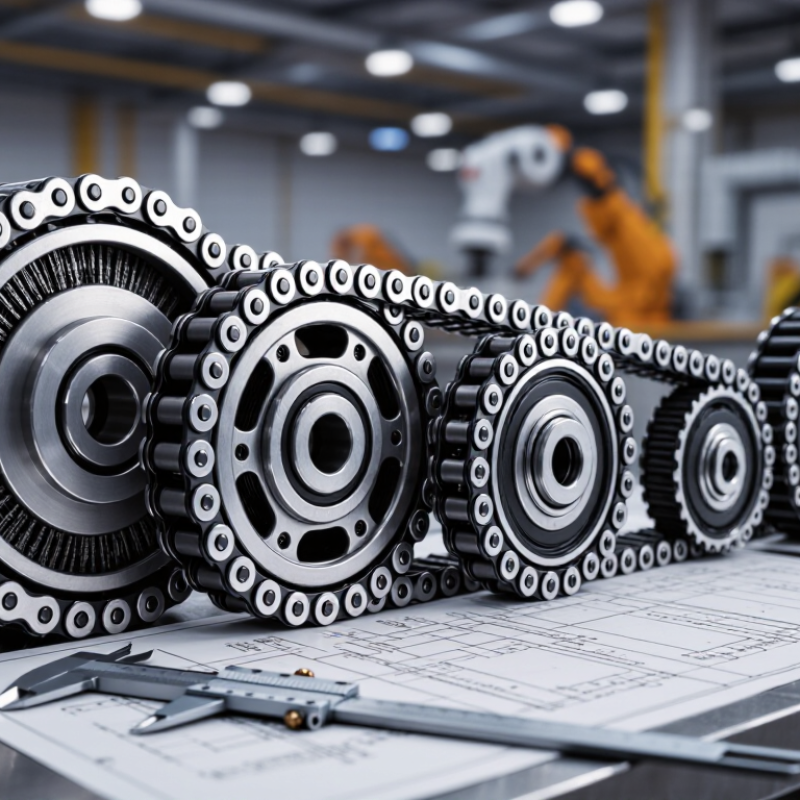
A steel belt uses stacked metal elements held by flexible rings; the elements transmit force mainly through compression. A CVT chain instead uses linked plates and pins to carry tensile load between the pulleys. Their contact surfaces, lubrication needs, and clamping requirements differ, so “belt” and “chain” are not interchangeable engineering terms. The EPA’s 2023 Automotive Trends Report recorded average real-world fuel economy of 27.1 mpg for new vehicles in model year 2022. That figure describes the overall fleet, not CVT-equipped vehicles alone, and should not be treated as proof that every CVT is more efficient. A useful inspection detail is the pulley face: scoring or uneven wear can signal poor contact. Even then, symptoms alone rarely identify the cause.
