


















What Are the Top Gauze Pad Types for Buyers in 2026?
In 2026, choosing a Gauze Pad is not simply a matter of comparing prices. Buyers must match the pad to its intended use, packaging needs, and handling workflow. Woven cotton gauze, nonwoven pads, sterile dressings, and nonsterile sponges each bring different practical trade-offs. Ply count matters, but it does not tell the whole story. Absorbency, linting, edge finish, size consistency, and pack configuration deserve equal attention. A sample can look suitable on a purchasing sheet, then behave differently when opened and handled. That detail is easy to miss.
Florence Nightingale, a foundational nursing authority, wrote, “The very first requirement in a hospital is that it should do the sick no harm.” This is not a gauze-specific statement, but it offers a useful safety lens for product evaluation. Buyers should verify specifications, review supplier documentation, and confirm that product claims fit the intended setting. For clinical decisions, qualified healthcare professionals should guide selection. This guide compares leading Gauze Pad types through a buyer’s lens, including material, sterility, format, and procurement considerations. There is no single best option for every order. Sometimes, a familiar product is chosen because it is familiar—not because its performance has been checked recently. That deserves a second look.
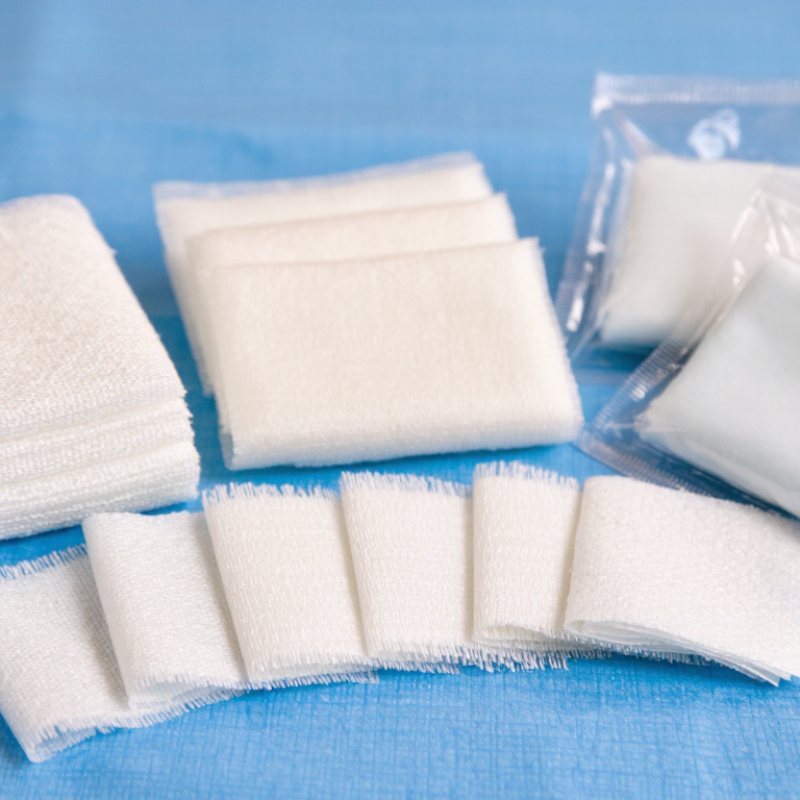
What Gauze Pads Are and How They Are Classified
Gauze pads are absorbent pieces of medical fabric used to cover wounds, manage light fluid, or cushion skin. They are commonly made from cotton, synthetic fibers, or blends. Their open structure lets air pass through, while folded layers provide a soft barrier. The details matter. A pad’s feel and performance depend on its material, weave, and construction.
One common classification is woven versus nonwoven. Woven gauze has a visible mesh, often with small openings that can catch loose fibers. Nonwoven pads use bonded fibers and usually have a smoother surface. Buyers may also compare ply, meaning the number of fabric layers, and pad dimensions. A compact pad suits a small area; a larger one covers more surface. Higher ply can add thickness, but it does not automatically mean better absorption.
Sterile and nonsterile describe another important distinction. Sterile pads are individually packaged for uses requiring a sterile product, while nonsterile packs may suit general cleaning or dressing tasks. Check the package label, material, size, ply, and intended use before selecting a type. Classification can overlap: a pad may be nonwoven, sterile, and available in several sizes. The categories help, but they are not a substitute for reading specifications. One detail is easy to miss: loose edges or lint can affect handling, so inspect product information rather than relying on the word “gauze” alone.
