









Who Are the Top Professional Kart Manufacturers in China?
China’s Professional Kart manufacturing scene deserves more than a sales-led ranking. Buyers need to compare frame construction, weld quality, steering response, braking consistency, parts availability, and documented testing. A clean chassis can look convincing under showroom lights. Its real character appears through repeated laps, tight corners, and dependable service support.
Grand View Research’s Go-Kart Market Size, Share & Trends Analysis Report, 2024–2030, provides useful context on the wider market. However, global market estimates do not establish which Chinese manufacturers build the best professional racing karts. FIA Karting’s technical regulations offer a stronger reference for understanding kart specifications and competition requirements. These sources help frame the questions; they do not replace factory audits or independent product testing.
This guide examines manufacturers through practical evidence: product range, engineering detail, production capability, customization, and after-sales support. Small things matter. A pedal that adjusts smoothly. A weld that remains consistent across the frame. A spare part that arrives when promised. Market claims still need checking.
A named expert quotation should be verified against a published source before use. No source material was provided here to confirm an expert’s exact words, so inventing a quotation would weaken the article’s reliability. The ranking should therefore distinguish documented facts from manufacturer claims—and acknowledge where evidence remains incomplete.
How Professional Kart Manufacturers Are Identified in China
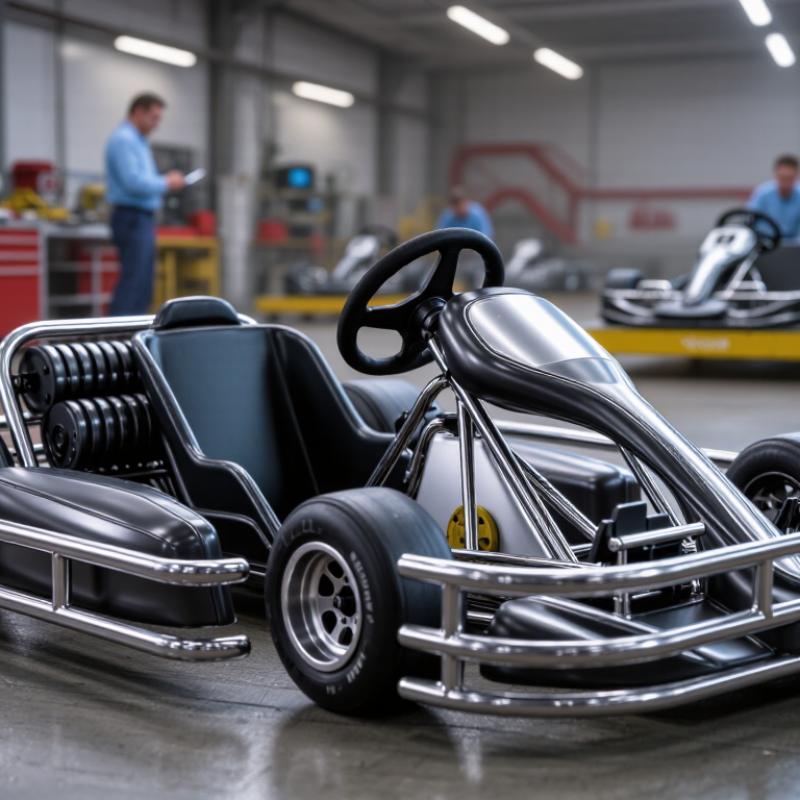
Identifying a professional kart manufacturer in China starts with evidence, not a polished catalog. Ask whether the company handles frame design, welding, assembly, and quality checks. During a factory visit, inspect weld consistency, steering alignment, cable routing, and paint around mounting points. These details show process discipline. Take notes.
Request technical drawings, material specifications, and inspection records for finished karts. Ask how the manufacturer checks frame dimensions, braking response, and fastener tightness. Look for documented test procedures and clear answers about production capacity and lead times. Records should match the product you can inspect, not just describe an ideal sample.
A clean workshop alone proves little; one strong sample may not represent every production batch. Compare several units and ask how defects are logged and corrected. No checklist is perfect. Communication matters, too: reliable teams explain limitations, share revisions, and provide practical maintenance guidance. Their evidence should be specific, consistent, and easy to verify.
