







Top 10 Types of Rail Component for Global Buyers?
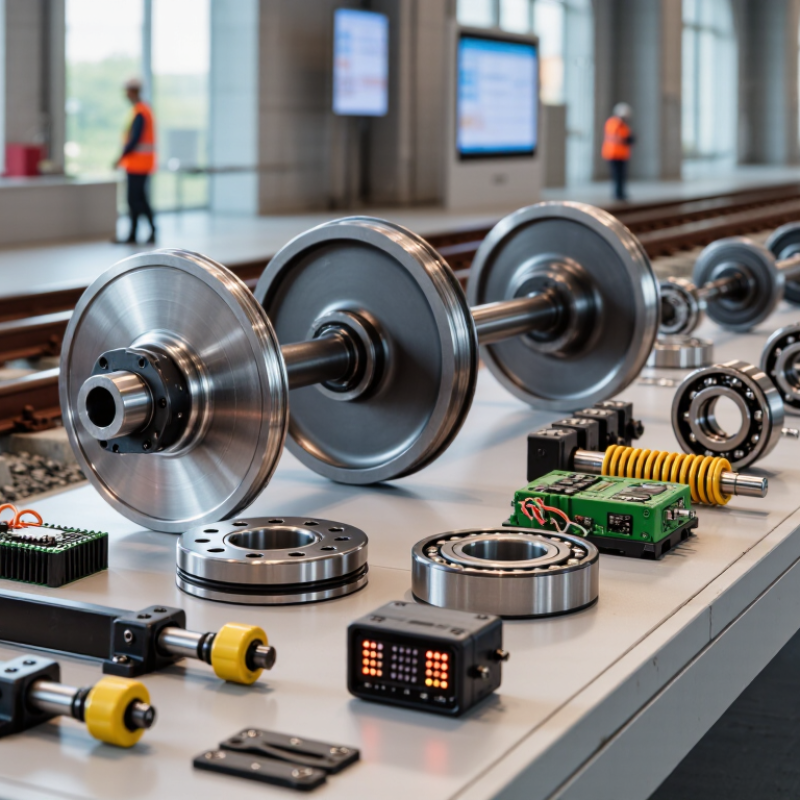
Rail Component selection is becoming a strategic issue for global railway buyers. A wheelset, brake disc, fastening clip, or signaling module can influence safety, availability, and lifecycle cost. Small parts matter. The margin is thin.
The UNIFE World Rail Market Study 2024 estimates that the global rail supply market will reach approximately €201.8 billion annually between 2027 and 2029. Its forecast includes rolling stock, infrastructure, services, and related equipment. Infrastructure investment remains uneven across regions, however. Public budgets, local standards, climate conditions, and maintenance practices can change purchasing priorities quickly.
Henri Poupart-Lafarge, former Alstom chief executive, described rail as “the backbone of sustainable mobility.” His statement reflects a wider industry reality. Rail systems depend on thousands of connected components, not one impressive machine. A supplier may offer excellent steel quality but weak documentation. Another may provide low prices but limited after-sales support. Buyers must examine both.
This article presents the top ten types of Rail Component for international procurement teams. It considers function, durability, certification, maintenance access, and supply continuity. The ranking is practical, not absolute. A metro operator may prioritize noise reduction, while a freight railway may value axle strength and load performance. Some comparisons remain difficult because manufacturers report data differently. That limitation deserves attention. Reliable purchasing requires technical evidence, site experience, and careful supplier verification.>tagger
Rail Profiles and Support: 60E1 Rails, Sleepers, Ballast, and Subgrade
Global rail buyers often compare components by price, yet support conditions deserve equal attention. A 60E1 rail profile provides a practical reference for heavy railway applications. Its dimensions, steel grade, and tolerances must match the approved design. Never treat the profile name as a complete specification.
Sleepers transfer wheel loads from the rail into the ballast. Concrete sleepers offer stable gauge control and long service life when properly installed. Timber and composite options may suit special environments, but moisture and fastening behavior require careful review. Rail fasteners need secure clamping without restricting controlled rail movement.
Ballast should be clean, angular, and resistant to crushing. Rounded stones can shift under repeated axle loads. Drainage matters just as much. Water trapped below the sleepers can weaken the track quickly. The subgrade must provide uniform support, not merely high strength in isolated tests. Poor transitions often create recurring settlement.
Inspection experience shows that small geometry errors become expensive maintenance problems. Uneven tamping is one example. Another is a soft pocket hidden beneath acceptable-looking ballast. Buyers should request test records, profile measurements, material certificates, and installation guidance. Delivery documents alone do not prove field performance. This point is easy to miss. A complete rail package also needs compatibility checks between rail, sleeper, fastening system, ballast depth, and local ground conditions. Budget comparisons should include drainage work and future maintenance, not only the initial component cost.
