










What Are the Top To Go Containers for Takeout Food?
Choosing the right To Go Containers can shape a customer’s entire takeout experience. A secure lid prevents spills before the meal reaches the car. Proper ventilation protects fried foods from turning soft inside trapped steam. Clear labeling also helps staff and customers identify meals quickly during busy service.
The best option depends on the food, delivery time, and serving temperature. Soup needs a leak-resistant container with a dependable seal. Salads often need separate compartments for dressing and crisp toppings. Burgers require enough space to avoid crushed buns. Microwave-safe materials can add convenience, but restaurants should follow the manufacturer’s heating guidance carefully. Food-safe paperboard, molded fiber, plastic, and aluminum each offer practical advantages. None is perfect.
Real-world testing matters more than attractive packaging claims. Fill each container with a typical portion, close it, and carry it across the kitchen. Then check for leaks, condensation, heat loss, and damaged corners. A container may perform well during a short pickup but fail during a longer delivery. That possibility deserves attention. Staff feedback can reveal problems that product specifications miss. Cost also matters, yet the cheapest option may create waste through spills, remakes, or poor presentation. Reliable choices balance protection, usability, sustainability, and customer expectations. This guide examines leading takeout containers through those practical details, helping food businesses make informed decisions without relying on marketing language alone.
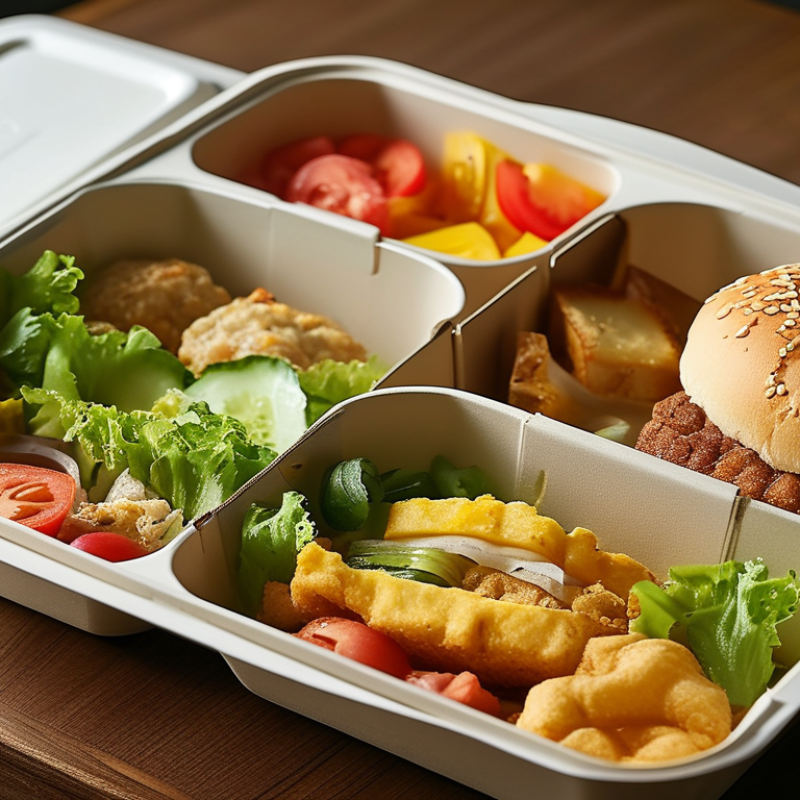
Types of To-Go Containers for Different Takeout Foods
The right to-go container depends on food texture, temperature, and travel time. The National Restaurant Association’s 2024 State of the Restaurant Industry report projected U.S. restaurant sales above $1 trillion, with off-premises dining remaining a major habit. That scale makes packaging performance more than a visual detail.
Crisp fried chicken, fries, and tempura need vented fiber clamshells. Small vents release steam and reduce sogginess. They still need space around the food. Overfilling defeats the design.
Saucy pasta, curries, and rice dishes fit better in leak-resistant polypropylene bowls with tight lids. For meals with separate toppings, compartment trays protect texture and prevent sauces from spreading. Noodles often travel well in paperboard bowls with wide openings, but weak lids can fail during delivery.
Cold salads and desserts need rigid containers that resist crushing and condensation. Clear lids help staff check portions quickly, while absorbent liners can protect sandwiches from moisture. The FDA Food Code 2022 recommends holding hot food at 135°F or above and cold food at 41°F or below; containers should support that time and temperature control, not replace it. Material claims also require care. A 2023 report from the Foodservice Packaging Institute noted continuing interest in recyclable and compostable formats, yet local recycling and composting systems vary widely. A container may look sustainable and still lack a practical recovery route.
