











What Is a Foot And Ankle Brace Used For?
A Foot And Ankle Brace is more than a rigid support wrapped around a painful joint. It can limit harmful movement, reduce strain, and help the ankle feel steadier during walking. Some braces protect a healing ligament after a sprain. Others support weak arches, unstable joints, or irritation caused by repetitive activity. The right design depends on the injury, foot shape, daily movement, and stage of recovery.
Dr. Lowell Weil Jr., a respected foot and ankle specialist, has emphasized, “The goal is to get patients back on their feet.” That goal requires more than choosing the tightest brace available. A properly fitted Foot And Ankle Brace should feel secure without causing numb toes, cold skin, or pressure marks. Imagine walking across a kitchen floor. Your heel should remain stable, while your toes can move naturally. Small details matter.
A brace may help control symptoms, but it does not repair every underlying problem. It cannot replace examination, rehabilitation, or appropriate footwear. Sometimes, patients wear support for too long. That can create dependence or hide worsening pain. This is an easy mistake to make. A clinician may recommend short-term use during sports, work, or uneven-ground walking. They may also adjust the brace as swelling decreases. The evidence and experience do not always provide a perfect answer for every foot. Therefore, this guide considers common uses, practical benefits, fitting concerns, and situations requiring professional assessment. The safest choice is usually the one that supports movement without forcing the foot into an unnatural position.
What Is a Foot and Ankle Brace?
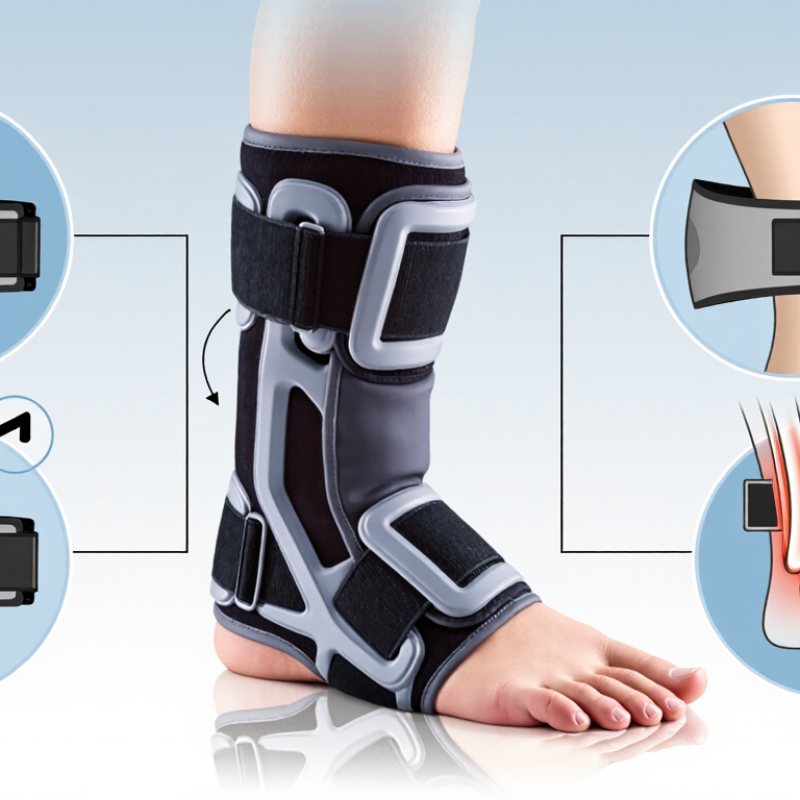
A foot and ankle brace is a wearable support that helps stabilize the lower leg, ankle, and foot. It usually wraps around the joint with fabric, straps, laces, or a molded shell. Some designs provide gentle compression. Others restrict side-to-side motion more firmly. The right structure depends on the injury, activity, and needed level of support. The goal is controlled movement, not complete immobilization. This distinction matters.
Clinicians may recommend a brace for ankle sprains, joint instability, tendon irritation, or recovery after certain procedures. It can make walking feel steadier on uneven ground. A brace may also reduce unwanted movement during sports or daily tasks. However, it does not repair damaged tissue by itself. A healthcare professional should assess ongoing swelling, numbness, severe pain, or difficulty bearing weight. Self-treatment can sometimes delay proper care.
Fit is important. The brace should feel supportive, but not painfully tight. Toes should remain warm, normally colored, and free from tingling. Check the skin after removing it, especially around the heel and ankle bones. A poorly fitted brace can create pressure spots or change walking mechanics. I have found that “more support” is not always better. Comfort, movement, and gradual rehabilitation still matter. Follow the fitting instructions, and review the brace if symptoms change.
