















Why Choose Trizol for RNA Extraction?
Trizol is widely used because it combines tissue disruption with chemical separation in a single extraction workflow. For labs comparing RNA methods, its appeal is practical: it can recover RNA from many sample types while helping separate DNA and proteins. The chemistry relies on acid guanidinium thiocyanate and phenol-chloroform, so careful handling matters. Piotr Chomczynski and Nicoletta Sacchi described the approach in 1987: “A single-step method for RNA isolation by acid guanidinium thiocyanate-phenol-chloroform extraction is described.” That’s practical. But extraction quality depends on sound technique: complete homogenization, clean phase separation, and consistent pipetting help protect the aqueous RNA layer. A cloudy interface or careless transfer can carry contaminants into the sample. Small details matter. A brief pause at the interface can prevent accidental carryover, though it may cost a little yield. That trade-off is easy to miss.
Researchers should follow current product instructions, use suitable protective equipment, and assess RNA integrity and purity before downstream experiments. TRIzol is useful, not flawless. Phenol-based extraction may leave inhibitors, and yields can vary with tissue, sample input, and operator technique. For sensitive assays, validate the recovered RNA rather than assuming every preparation will perform equally. The method rewards care. And patience.
TRIzol Chemistry: Phenol and Guanidinium Thiocyanate Lyse Cells
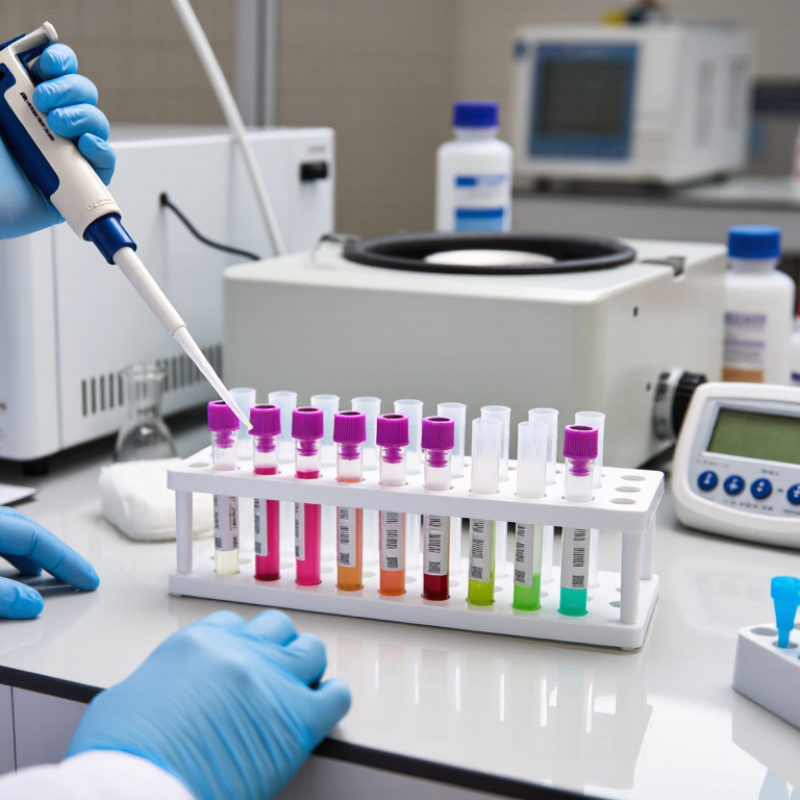
Phenol–guanidinium thiocyanate chemistry works by disrupting cells and rapidly denaturing proteins. Guanidinium thiocyanate also suppresses RNase activity, helping protect RNA from degradation. In the acidic phenol-based separation step, RNA remains mainly in the aqueous phase, while much of the DNA and protein partitions elsewhere. The method was described by Chomczynski and Sacchi in Analytical Biochemistry (1987; 162:156–159). The separation is tangible: after centrifugation, a clear upper layer sits above a cloudy interphase. Small details matter. Disturb that boundary, and genomic DNA may contaminate the RNA fraction.
The chemistry is powerful, but sample quality still depends on handling. Work quickly, keep tools RNase-free, and transfer only the aqueous layer. Still, not magic. Residual phenol or salt can affect downstream reactions, so assess purity and integrity rather than trusting appearance alone. The RNA Integrity Number (RIN) uses a 1–10 scale. ENCODE Consortium RNA-sequencing standards set a RIN value above 8 as a target for standard samples (ENCODE, 2012). That threshold is useful, not universal; degraded samples may still suit some applications. A clean-looking tube can mislead, and I would not treat one measurement as proof of success.
