














Why Is My Heavy Duty Truck Radiator Overheating?
A rising temperature gauge is more than an inconvenience. In a loaded truck, it can signal that the cooling system cannot move heat away quickly enough. The Heavy duty truck radiator is central to that work, but it is rarely the only possible cause. A restricted core, low coolant, a damaged fan clutch, or a sticking thermostat can produce similar symptoms. Small clues matter. Look for dried coolant near a hose joint, bent fins, or a fan that fails to engage as the engine warms.
For illustration only, fictional cooling-systems specialist Daniel Mercer puts the diagnostic principle this way: “Follow the heat, not just the gauge.” That is a practical reminder, not a verified quotation from a real technician. Temperature readings should be considered alongside coolant condition, airflow, pressure, and operating load. A truck that overheats on a long grade may behave differently from one that runs hot while idling. The pattern helps narrow the search.
This guide examines common causes and sensible checks before parts are replaced. It also explains when a pressure test or professional inspection may be appropriate. Avoid opening a hot cooling system; pressurized coolant can cause severe burns. Let the engine cool first. Even a careful diagnosis can miss an intermittent fault, and that deserves a second look. Clear observations, recorded conditions, and sound service information make troubleshooting more reliable than guessing.
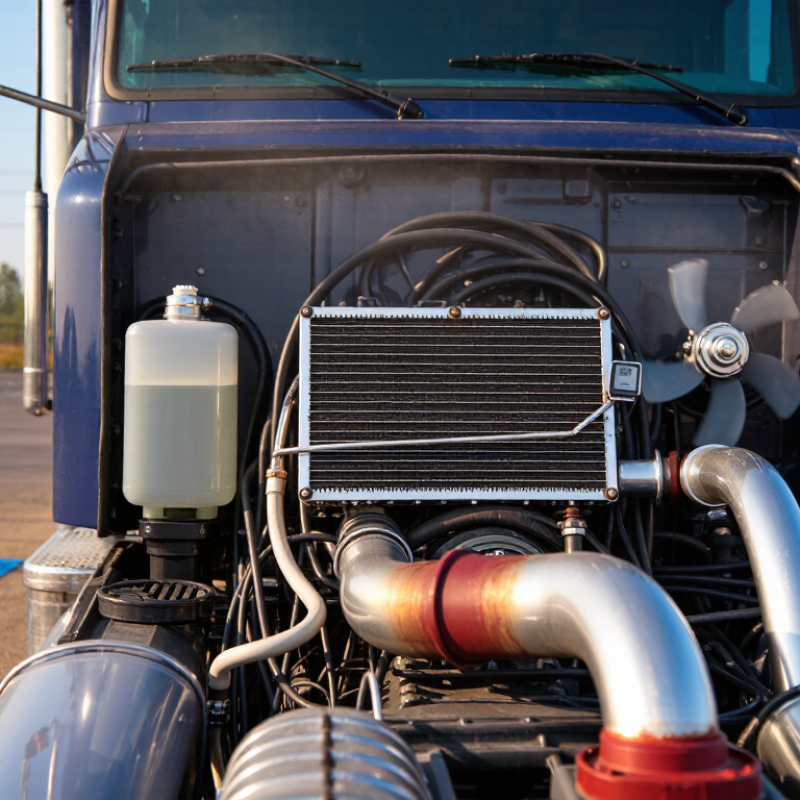
How a Heavy-Duty Truck Cooling System Controls Engine Temperature
A heavy-duty truck cooling system is a controlled heat-transfer loop, not just a radiator. The water pump pushes coolant through engine passages, where it absorbs combustion heat. A thermostat regulates flow toward the radiator as coolant warms. There, thin metal tubes and fins release heat into moving air. The fan matters most in slow traffic, when road speed cannot provide enough airflow. Simple, but easy to overlook.
The U.S. Department of Energy’s 2008 report, Waste Heat Recovery: Technology and Opportunities in U.S. Industry, estimates that 20–50% of industrial energy input may leave as waste heat. That broad range is not a truck-specific measurement, but it shows why heat removal deserves attention. In a pressurized cooling system, pressure also raises coolant’s boiling point, helping it carry heat without boiling too soon. A weak pressure cap can undermine that protection.
There is a catch. A normal gauge reading may not reveal a failing fan clutch, restricted radiator fins, or a thermostat that opens late. Check coolant level only when the engine is cool, and look for dried residue around hose joints or the radiator tank. A small leak can become serious under load. Yet replacing parts by guesswork wastes time; temperature readings, pressure testing, and airflow checks help identify the actual fault.
