


















What Is Yeast Extract Powder and What Is It Used For?
Yeast Extract Powder is a concentrated savory ingredient made from yeast cells, commonly through controlled breakdown and processing. It can add rounded, broth-like depth to soups, sauces, seasonings, snacks, and plant-based foods. A small amount may noticeably change a product’s aroma and taste. But it is not one uniform ingredient; source, processing, and formulation affect its flavor and composition.
There is a practical reason manufacturers examine it closely. The World Health Organization’s 2023 Global Report on Sodium Intake Reduction estimated average global sodium consumption at 4,310 milligrams per person daily in 2019—more than twice its recommended maximum of 2,000 milligrams. Yeast extract can help build savory flavor in some reduced-sodium recipes, though it does not automatically make a product low in sodium. The U.S. Food and Drug Administration also notes that glutamate occurs naturally in ingredients such as yeast extract; that does not mean every extract has the same composition or taste.
Industry research helps explain its commercial reach. Grand View Research’s 2024 Yeast Extract Market analysis examines demand across applications and regions, reflecting its use beyond a single food category. Still, market estimates depend on how analysts define the ingredient and its uses. That detail matters. This guide explains what Yeast Extract Powder is, how it is made, where it is used, and what buyers should check on product specifications and labels.
What Yeast Extract Powder Is and What It Contains
Yeast extract powder is made from the soluble contents of yeast cells, often baker’s yeast. During processing, enzymes break down proteins and other cell components. The cell walls are then separated, and the remaining extract is concentrated and dried. It is not the same as live yeast. It will not make bread rise.
What does it contain? Mostly amino acids and small peptides, formed as proteins are broken apart. It also contains naturally occurring glutamate, which contributes a savory, umami taste. Nucleotides can add to that flavor. Depending on the yeast and production method, the powder may also contain carbohydrates, minerals, and B vitamins in varying amounts. The exact balance is not fixed.
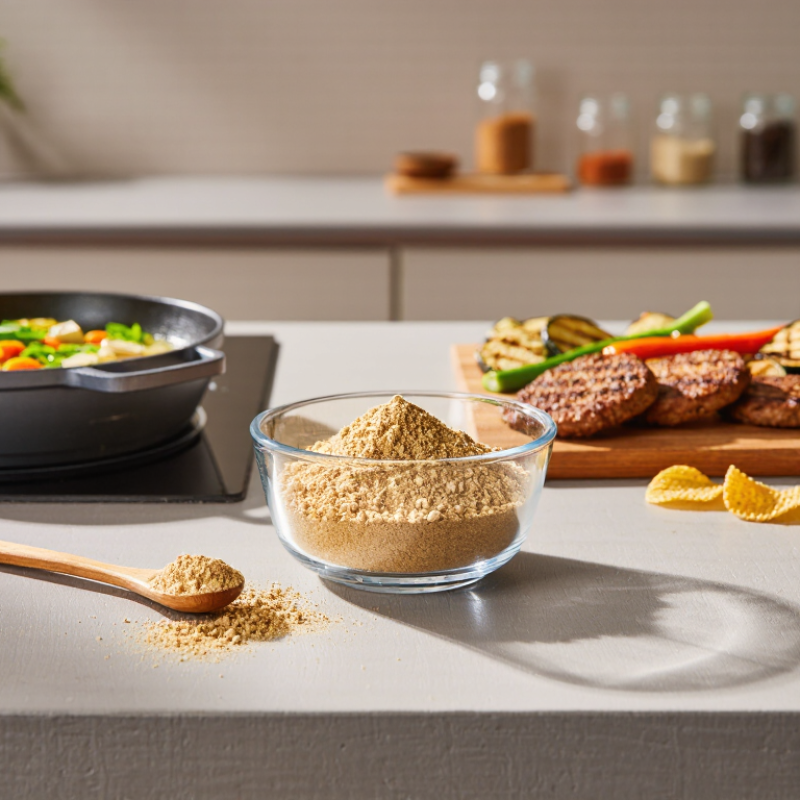
That variation matters. A fine, tan powder may taste mild and rounded, while another sample can seem quite salty or intensely savory. Yeast extract is not simply powdered yeast, though the name can suggest that. It is a concentrated ingredient, and its composition depends on how it was made. Labels and nutrition panels offer more useful details than the name alone.
